
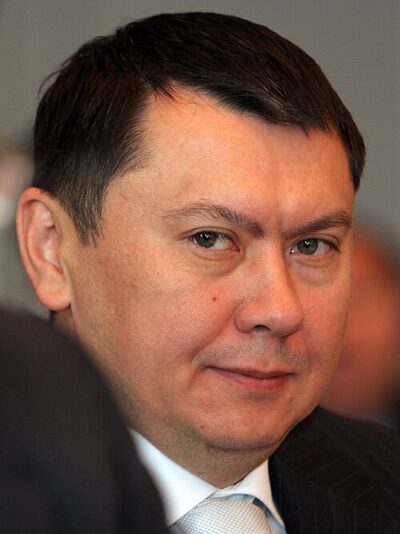
Rakhat Aliev
Rakhat Aliev was a Kazakh economist and politician. Born December 10, 1962, in Almaty. Died February 24, 2015, in Vienna Josefstadt Prison. Positions held include ambassador of Kazakhstan. Educated at Kazakh National Medical University and Adilet Law Academy. Awards include Order of Glory, 2nd Class, Medal "10 Years of Independence of the Republic of Kazakhstan" and Medal commemorating 10 years of the Parliament of the Republic of Kazakhstan.
Facts
25 facts · 2 confirmed by two sources · 0 cited · 23 from one source
Where this comes from
Papalocal keeps its own record. It started from these sources; what each one said is kept here as it was copied, so a change on their side never changes this page by itself. Tap one to read its version.
What Wikidata says · copied November 17, 2026 · revision 2554057458
- Described as
- Kazakh economist and politician (1962–2015)
- Other names
- Rakhat Mukhtaruly Aliev
- Born
- December 10, 1962
- Died
- February 24, 2015
- Born in
- Almaty
- Died in
- Vienna Josefstadt Prison
- Buried in
- Vienna Central Cemetery
- Cause of death
- hanging to death
- Citizen of
- Soviet Union; Kazakhstan
- Occupation
- diplomat; economist; politician · 1 reference; businessperson · 1 reference
- Positions held
- ambassador of Kazakhstan
- Education
- Kazakh National Medical University; Adilet Law Academy
- Awards
- Order of Glory, 2nd Class (–2008) · 1 reference; Medal "10 Years of Independence of the Republic of Kazakhstan"; Medal commemorating 10 years of the Parliament of the Republic of Kazakhstan; Grand Cross of the Order of Honour for Services to the Republic of Austria
- Spouse
- Darigha Nazarbaeva (–2007)
- Children
- Nurali Aliyev; Aisultan Nazarbayev
- Father
- Mukhtar Aliev
- Military branch
- National Security Committee of the Republic of Kazakhstan
- Military rank
- major general
- Wikipedias with a page
- 24
Wikidata item Q701515 (wikidata.org/wiki/Q701515), public domain (CC0). Copied November 17, 2026.
What Wikipedia says · copied November 17, 2026 · revision 1385981694
Rakhat Mukhtaruly Aliyev (Kazakh: Рахат Мұхтарұлы Әлиев, Rahat Mūhtarūly Äliev; 10 December 1962 – 24 February 2015) was a Kazakh politician and diplomat, who died in an Austrian prison awaiting trial on charges of murder. His trial was planned to start in Vienna in first half of year 2015. Austrian legal circles were giving much attention to this high-profile criminal case in which a former diplomat was facing murder charges.
He was chief of Kazakhstan's tax police, deputy chief of the KNB state security service (Kazakhstan's successor to the Soviet KGB), ambassador to Austria, and first vice foreign minister. While serving in those government posts, Aliyev amassed a fortune in the banking, oil refining, news media, telecommunications, and agricultural commodities sectors. He was born in Almaty.
In February 2007, he was appointed to his second tour as Kazakhstan's ambassador to Austria and to the Organization for Security and Cooperation in Europe, before being relieved of his post and losing his diplomatic immunity.
Until June 2007, Aliyev was married to Dariga Nazarbayeva, the eldest daughter of Kazakh President Nursultan Nazarbayev.
After hiding in Malta to avoid an Interpol warrant for his arrest, and attempting to gain Cypriot citizenship, Aliyev was taken into custody in June 2014 by Austrian authorities on charges that include kidnapping and murder. He was jailed at the Josefstadt prison pending trial, and was placed under watch as a suicide risk.
Aliyev, who portrayed himself as a dissident after falling out with Kazakhstan's leadership, said that he was not guilty and the charges against him were politically motivated.
- Born, in its opening lines
- December 10, 1962
- Died, in its opening lines
- February 24, 2015
From the Wikipedia article “Rakhat Aliyev” (en.wikipedia.org/wiki/Rakhat_Aliyev), by its contributors, under CC BY-SA 4.0 (creativecommons.org/licenses/by-sa/4.0/). Copied November 17, 2026; not changed.
Confirmed Two sources agree. Cited One source, and it names where it got it. One source One source, without a reference of its own. Sources disagree The sources disagree. We show the best-supported value and keep theirs below.
