
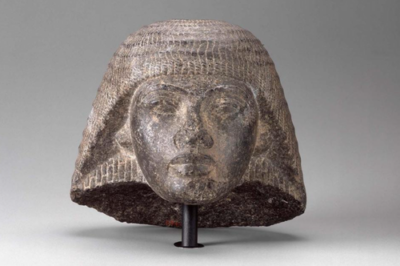
Ramesses I
Ramesses I was a founding pharaoh of Ancient Egypt's Nineteenth Dynasty. Born 13th century BC, in Avaris. Died 1290 BC. Positions held include pharaoh (-1291–-1289), Saqqara king and Pharaoh of the Nineteenth Dynasty of Egypt.
Facts
14 facts · 0 confirmed by two sources · 1 cited · 13 from one source
Where this comes from
Papalocal keeps its own record. It started from these sources; what each one said is kept here as it was copied, so a change on their side never changes this page by itself. Tap one to read its version.
What Wikidata says · copied November 16, 2026 · revision 2557364960
- Described as
- founding pharaoh of Ancient Egypt's Nineteenth Dynasty
- Other names
- Ramesses, Pa-ra-mes-su, Menpehtyre, Rameses
- Born
- 13th century BC
- Died
- 1290 BC
- Born in
- Avaris
- Buried in
- KV16
- Citizen of
- Ancient Egypt
- Occupation
- sovereign
- Positions held
- pharaoh (-1291–-1289) · 1 reference; Saqqara king; Pharaoh of the Nineteenth Dynasty of Egypt; pharaoh in the New Kingdom
- Spouse
- Sitre · 1 reference
- Children
- Seti I; Tanedjemet
- Father
- Seti
- Wikipedias with a page
- 55
Wikidata item Q1526 (wikidata.org/wiki/Q1526), public domain (CC0). Copied November 16, 2026.
What Wikipedia says · copied November 16, 2026 · revision 1381459466
Menpehtyre Ramesses I was the founding pharaoh of ancient Egypt's 19th Dynasty. The dates for his short reign are not completely known but the timeline of late 1292–1290 BC is frequently cited as well as 1295–1294 BC. While Ramesses I was the founder of the 19th Dynasty, his brief reign mainly serves to mark the transition between the reign of Horemheb, who had stabilized Egypt in the late 18th Dynasty, and the rule of the powerful pharaohs of his own dynasty, in particular his son Seti I and grandson Ramesses II.
From the Wikipedia article “Ramesses I” (en.wikipedia.org/wiki/Ramesses_I), by its contributors, under CC BY-SA 4.0 (creativecommons.org/licenses/by-sa/4.0/). Copied November 16, 2026; not changed.
Confirmed Two sources agree. Cited One source, and it names where it got it. One source One source, without a reference of its own. Sources disagree The sources disagree. We show the best-supported value and keep theirs below.
