
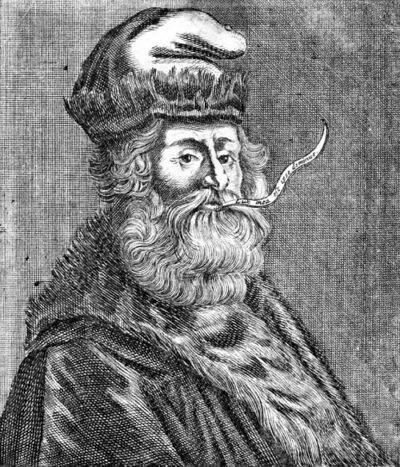
Ramon Llull
Ramon Llull was a Majorcan writer and philosopher (c.1232–1315/6). Born 1232, in Palma. Died 1316. Known for Felix or the Book of Wonders, Blanquerna and Book of the Beasts. Educated at University of Montpellier (1289-1969).
Facts
32 facts · 2 confirmed by two sources · 6 cited · 24 from one source
Where this comes from
Papalocal keeps its own record. It started from these sources; what each one said is kept here as it was copied, so a change on their side never changes this page by itself. Tap one to read its version.
What Wikidata says · copied November 16, 2026 · revision 2568738028
- Described as
- Majorcan writer and philosopher (c.1232–1315/6)
- Other names
- Illuminated Doctor, Raymondus Lullus, Raymond Lull, Ramón Llull, Raimundus Lullus, Raimundo Lulio, Raymond Lulle, Raymundus Lullius, Raimondo Lullo, Raymond Lully
- Born
- 1232; 1232 · 1 reference
- Died
- 1316 · 3 references
- Born in
- Palma · 2 references
- Buried in
- Basilica of St. Francis
- Citizen of
- Kingdom of Majorca · 1 reference
- Occupation
- philosopher · 2 references; writer · 3 references; theologian · 1 reference; missionary; astrologer; poet · 1 reference; cleric; novelist
- Education
- University of Montpellier (1289-1969)
- Genre
- autobiography; dialogue; treatise; proverb; compendium
- Known for
- Felix or the Book of Wonders; Blanquerna · 1 reference; Book of the Beasts · 1 reference; Tree of Science · 1 reference; Ars magna; Book of the Order of Chivalry; Book of the Gentile and the Three Wise Men; Llibre de santa Maria; Book of Contemplation in God; Art de contemplació
- Spouse
- Blanca Picany
- Religion
- Catholic Church
- Lived in
- Palma
- Wikipedias with a page
- 75
Wikidata item Q193660 (wikidata.org/wiki/Q193660), public domain (CC0). Copied November 16, 2026.
What Wikipedia says · copied November 16, 2026 · revision 1385563090
Ramon Llull (; Catalan: [rəˈmoɲ ˈʎuʎ]; c. 1232 – 1316), sometimes anglicized as Raymond Lully, was a Catholic philosopher, theologian, poet, missionary, apologist and former knight, born in Palma de Mallorca. He invented a philosophical system known as the Art, conceived as a type of universal logic to prove the truth of Christian doctrine to interlocutors of all faiths and nationalities. The Art consists of a set of general principles and combinatorial operations. It is illustrated with diagrams.
A prolific writer, he is also known for his literary works written in Catalan, which he composed to make his Art accessible to a wider audience. In addition to Catalan and Latin, he also probably wrote in Arabic (although no texts in Arabic survive). His books were translated into Occitan, French, and Castilian during his lifetime.
Although his work did not enjoy huge success during his lifetime, he has had a rich and continuing reception. In the early modern period his name became associated with alchemical works. More recently he has been recognized as a precursor of the modern field of social choice theory, 450 years before Borda and Condorcet's investigations reopened the field. His ideas also prefigured the development of computation theory.
Venerated as a saintly figure in the Catholic Church, he was beatified by Pope Pius IX in 1847. In several respects close to the experience of the Beguines, Ramon Llull remained a layman — a secular individual — throughout his entire life; there is no evidence that he ever joined a religious order, not even as a Franciscan tertiary, as was once believed.
- Born, in its opening lines
- 1232
- Died, in its opening lines
- 1316
From the Wikipedia article “Ramon Llull” (en.wikipedia.org/wiki/Ramon_Llull), by its contributors, under CC BY-SA 4.0 (creativecommons.org/licenses/by-sa/4.0/). Copied November 16, 2026; not changed.
Confirmed Two sources agree. Cited One source, and it names where it got it. One source One source, without a reference of its own. Sources disagree The sources disagree. We show the best-supported value and keep theirs below.
