
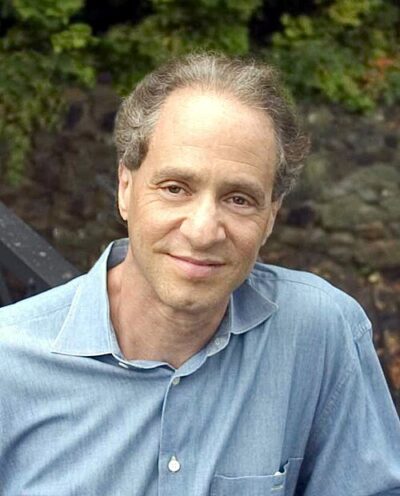
Raymond Kurzweil
Raymond Kurzweil is an American computer scientist, author, entrepreneur, futurist and inventor. Born February 12, 1948, in Queens. Known for predictions made by Ray Kurzweil. Educated at Massachusetts Institute of Technology and Martin Van Buren High School. Awards include Grace Murray Hopper Award, Lemelson–MIT Prize and National Medal of Technology and Innovation.
Facts
34 facts · 1 confirmed by two sources · 12 cited · 21 from one source
Where this comes from
Papalocal keeps its own record. It started from these sources; what each one said is kept here as it was copied, so a change on their side never changes this page by itself. Tap one to read its version.
What Wikidata says · copied November 13, 2026 · revision 2564488352
- Described as
- American computer scientist, author, entrepreneur, futurist and inventor (born 1948)
- Other names
- Ray Kurzweil, the ultimate thinking machine, Edison's rightful heir, RK, restless genius, Raymond C. Kurzweil
- Born
- February 12, 1948 · 7 references
- Born in
- Queens · 1 reference
- Citizen of
- United States · 1 reference
- Occupation
- inventor · 2 references; computer scientist; entrepreneur · 1 reference; writer · 1 reference; science fiction writer; scientist · 1 reference; futurist · 2 references; artificial intelligence researcher
- Worked for
- Google (2012–)
- Education
- Massachusetts Institute of Technology; Martin Van Buren High School · 1 reference
- Member of
- American Academy of Arts and Sciences; Association for Computing Machinery (1994–) · 1 reference
- Known for
- predictions made by Ray Kurzweil
- Awards
- Grace Murray Hopper Award (1978); Lemelson–MIT Prize (2001); National Medal of Technology and Innovation (1999) · 1 reference; National Inventors Hall of Fame (2002) · 1 reference; Dickson Prize in Science (1995); Dickson Prize · 1 reference; ACM Fellow (1994) · 1 reference; Migel Medal (2004) · 1 reference
- Field
- futures studies; computer programming · 1 reference; optical character recognition; speech synthesis; speech recognition
- Children
- Amy Kurzweil
- Religion
- atheism
- Lived in
- United States · 1 reference
- Website
- https://www.thekurzweillibrary.com/
- Wikipedias with a page
- 54
Wikidata item Q298341 (wikidata.org/wiki/Q298341), public domain (CC0). Copied November 13, 2026.
What Wikipedia says · copied November 13, 2026 · revision 1385297946
Raymond Kurzweil ( KURZ-wyle; born February 12, 1948) is an American computer scientist, author, entrepreneur, futurist, and inventor. He is involved in fields such as optical character recognition (OCR), text-to-speech synthesis, speech recognition technology and electronic keyboard instruments. He has written books on health technology, artificial intelligence (AI), transhumanism, the technological singularity, and futurism. Kurzweil is a prominent transhumanist who gives lectures about his optimistic outlook on the possibility of life extension via nanotechnology, robotics, and biotechnology.
Kurzweil received the 1999 National Medal of Technology and Innovation, the United States' highest honor in technology, from President Bill Clinton in a White House ceremony. He received the $500,000 Lemelson–MIT Prize in 2001. He was elected a member of the National Academy of Engineering in 2001 for the application of technology to improve human-machine communication. In 2002 he was inducted into the National Inventors Hall of Fame, established by the U.S. Patent Office. He has 21 honorary doctorates and honors from three U.S. presidents. The Public Broadcasting Service (PBS) included Kurzweil as one of 16 "revolutionaries who made America" along with other inventors of the past two centuries. Inc. magazine ranked him No. 8 among the "most fascinating" entrepreneurs in the United States and called him "Edison's rightful heir".
- Born, in its opening lines
- February 12, 1948
From the Wikipedia article “Ray Kurzweil” (en.wikipedia.org/wiki/Ray_Kurzweil), by its contributors, under CC BY-SA 4.0 (creativecommons.org/licenses/by-sa/4.0/). Copied November 13, 2026; not changed.
Confirmed Two sources agree. Cited One source, and it names where it got it. One source One source, without a reference of its own. Sources disagree The sources disagree. We show the best-supported value and keep theirs below.
