
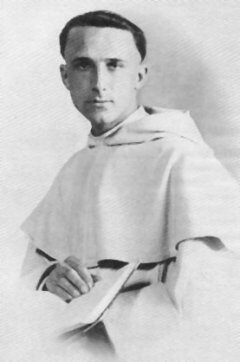
Reginald Garrigou-Lagrange
Reginald Garrigou-Lagrange was a French theologian. Born February 21, 1877, in Auch. Died February 15, 1964, in Rome. Educated at Faculty of Arts of Paris.
Facts
14 facts · 2 confirmed by two sources · 2 cited · 10 from one source
Where this comes from
Papalocal keeps its own record. It started from these sources; what each one said is kept here as it was copied, so a change on their side never changes this page by itself. Tap one to read its version.
What Wikidata says · copied November 17, 2026 · revision 2549173333
- Described as
- French theologian (1877-1964)
- Born
- February 21, 1877 · 2 references
- Died
- February 15, 1964 · 2 references
- Born in
- Auch
- Died in
- Rome
- Buried in
- Campo Verano · 1 reference
- Citizen of
- France
- Occupation
- philosopher; Catholic priest; friar; Catholic theologian · 1 reference
- Worked for
- Pontifical University of Saint Thomas Aquinas
- Education
- Faculty of Arts of Paris
- Religion
- Catholic Church; Catholicism
- Wikipedias with a page
- 28
Wikidata item Q1342881 (wikidata.org/wiki/Q1342881), public domain (CC0). Copied November 17, 2026.
What Wikipedia says · copied November 17, 2026 · revision 1385567785
Réginald Marie Garrigou-Lagrange (French: [gaʁigu lagʁɑ̃ʒ]; 21 February 1877 – 15 February 1964) was a French Dominican friar, philosopher and theologian. As a neo-Thomist, he is recognized along with Édouard Hugon and Martin Grabmann as a distinguished theologian of the 20th century. As professor at the Pontifical University of Saint Thomas Aquinas, he taught dogmatic and spiritual theology in Rome from 1909 to 1959. There he wrote The Three Ages of the Interior Life (Les trois âges de la vie intérieure) in 1938.
- Born, in its opening lines
- February 21, 1877
- Died, in its opening lines
- February 15, 1964
From the Wikipedia article “Réginald Garrigou-Lagrange” (en.wikipedia.org/wiki/Réginald_Garrigou-Lagrange), by its contributors, under CC BY-SA 4.0 (creativecommons.org/licenses/by-sa/4.0/). Copied November 17, 2026; not changed.
Confirmed Two sources agree. Cited One source, and it names where it got it. One source One source, without a reference of its own. Sources disagree The sources disagree. We show the best-supported value and keep theirs below.
