
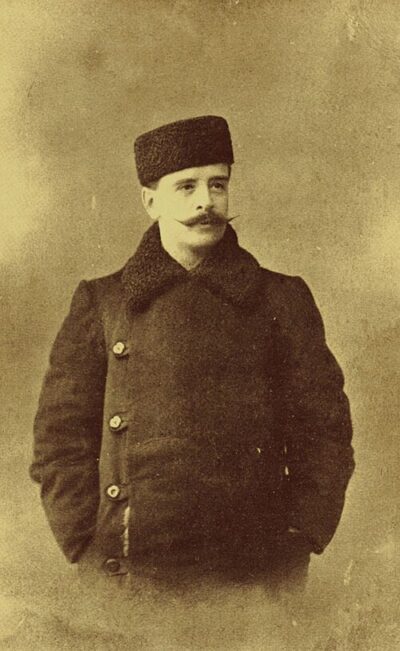
Riccardo Drigo was an artist. Born June 30, 1846, in Padua. Died October 1, 1930, in Padua. Known for The Enchanted Forest, The Talisman and The Magic Flute. Educated at Conservatorio di Musica Benedetto Marcello di Venezia.
Facts
19 facts · 2 confirmed by two sources · 5 cited · 12 from one source
Where this comes from
Papalocal keeps its own record. It started from these sources; what each one said is kept here as it was copied, so a change on their side never changes this page by itself. Tap one to read its version.
What Wikidata says · copied November 18, 2026 · revision 2554663811
- Described as
- artist (1846-1930)
- Other names
- Riccardo Eugenio Drigo
- Born
- June 30, 1846 · 10 references
- Died
- October 1, 1930 · 9 references
- Born in
- Padua · 2 references
- Died in
- Padua · 1 reference
- Citizen of
- Kingdom of Italy (1861–); Russian Empire
- Occupation
- composer · 1 reference; conductor · 2 references; choreographer; pianist · 2 references
- Education
- Conservatorio di Musica Benedetto Marcello di Venezia
- Genre
- opera; ballet
- Known for
- The Enchanted Forest; The Talisman; The Magic Flute; Le Réveil de Flore; La Perle; Les Millions d'Arlequin
- Wikipedias with a page
- 21
Wikidata item Q545830 (wikidata.org/wiki/Q545830), public domain (CC0). Copied November 18, 2026.
What Wikipedia says · copied November 18, 2026 · revision 1375168007
Riccardo Drigo (Russian: Риккардо Дриго, romanized: Rikkardo Drigo; 30 June 1846 – 1 October 1930) was an Italian composer of ballet music and Italian opera, a theatrical conductor, and a pianist.
Drigo is noted for his long career as principal Chef d'orchestre/kapellmeister and Music Director of the Imperial Ballet of Saint Petersburg, Russia, for which he composed music for the original works and revivals of the choreographers Marius Petipa and Lev Ivanov. During his career in Saint Petersburg, Drigo conducted the premieres and regular performances of nearly every ballet performed on the Tsarist stage.
Drigo is equally noted for his original full-length compositions for the ballet as well as his large catalog of supplemental music written ad hoc for insertion into already-existing works. Drigo is also noted for his adaptations of already-existing scores, such as his 1895 edition of Pyotr Ilyich Tchaikovsky's score for Swan Lake. Many pieces set to the music of Drigo are still performed today, and are considered cornerstones of the classical ballet repertory.
- Born, in its opening lines
- June 30, 1846
- Died, in its opening lines
- October 1, 1930
From the Wikipedia article “Riccardo Drigo” (en.wikipedia.org/wiki/Riccardo_Drigo), by its contributors, under CC BY-SA 4.0 (creativecommons.org/licenses/by-sa/4.0/). Copied November 18, 2026; not changed.
Confirmed Two sources agree. Cited One source, and it names where it got it. One source One source, without a reference of its own. Sources disagree The sources disagree. We show the best-supported value and keep theirs below.
