
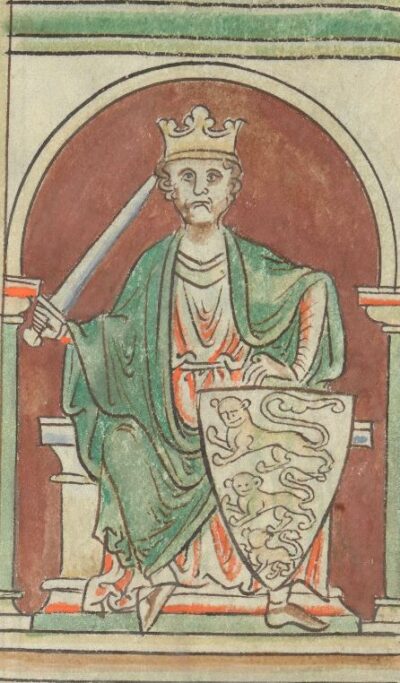
Richard I of England
Richard I of England was a King of England from 1189 to 1199. Born September 8, 1157, in Beaumont Palace. Died April 6, 1199, in Châlus. Positions held include Monarch of England (1189–1199), Duke of Normandy (1189–1199) and duke of Aquitaine. Known for Lyrical poems.
Facts
36 facts · 2 confirmed by two sources · 11 cited · 23 from one source
Where this comes from
Papalocal keeps its own record. It started from these sources; what each one said is kept here as it was copied, so a change on their side never changes this page by itself. Tap one to read its version.
What Wikidata says · copied November 16, 2026 · revision 2563140483
- Described as
- King of England from 1189 to 1199 (1157–1199)
- Other names
- Lionheart, Richard the Lionheart, Richard I, Cœur de Lion, Richard Cœur de Lion
- Born
- September 8, 1157 · 1 reference
- Died
- April 6, 1199 · 1 reference
- Born in
- Beaumont Palace · 1 reference
- Died in
- Châlus · 1 reference
- Buried in
- Royal abbey of Fontevraud
- Cause of death
- gangrene
- Citizen of
- Kingdom of England
- Occupation
- poet; composer · 2 references; monarch
- Positions held
- Monarch of England (1189–1199); Duke of Normandy (1189–1199); duke of Aquitaine; Duke of Gascony; king; Count of Anjou; count of Maine; count of Poitiers
- Known for
- Lyrical poems
- Spouse
- Berengaria of Navarre (1191–1199) · 2 references
- Children
- Philip of Cognac; Fulk (?) · 1 reference
- Father
- Henry II of England · 1 reference
- Mother
- Eleanor of Aquitaine · 1 reference
- Siblings
- John, King of England · 1 reference; William Longespée, 3rd Earl of Salisbury; Geoffrey; Henry the Young King · 1 reference; Geoffrey II; William IX, Count of Poitiers; Morgan; Eleanor of England · 1 reference; Joan of England; Matilda of England, Duchess of Saxony · 1 reference
- Religion
- Catholicism
- Military rank
- knight
- Wikipedias with a page
- 112
Wikidata item Q42305 (wikidata.org/wiki/Q42305), public domain (CC0). Copied November 16, 2026.
What Wikipedia says · copied November 16, 2026 · revision 1384018534
Richard I (8 September 1157 – 6 April 1199), known as Richard the Lionheart or Richard Cœur de Lion (Old Norman French: Quor de Lion) because of his reputation as a great military leader and warrior, was King of England from 1189 until his death in 1199. He also ruled as Duke of Normandy, Aquitaine, and Gascony; Lord of Cyprus; Count of Poitiers, Anjou, Maine, and Nantes; and was overlord of Brittany at various times during the same period. He was the third of five sons of Henry II of England and Eleanor of Aquitaine and was therefore not expected to become king, but his two elder brothers predeceased their father.
By the age of 16, Richard had taken command of his own army, putting down rebellions in Poitou against his father. Richard was an important Christian commander during the Third Crusade, leading the campaign after the departure of Philip II of France. Despite achieving several victories against his Muslim counterpart, Saladin, he was ultimately forced to end his campaign without retaking Jerusalem.
Richard probably spoke both French and Occitan, and based on the testimony of Roger of Howden, most likely understood Middle English. He was born in England, where he spent his childhood; before becoming Duke of Aquitaine, however, he lived most of his adult life in the Duchy of Aquitaine, in the southwest of France. Following his accession to the crown of England, he spent very little time, perhaps as little as six months, in England. Most of his reign was spent on Crusade, in captivity, or actively defending the French portions of the Angevin Empire.
Though regarded as a model king and a paragon of chivalry during the four centuries after his death and viewed as a pious and chivalrous hero by his subjects, he was later perceived by historians as a ruler who treated the kingdom of England merely as a source of revenue for his armies rather than a land entrusted to his stewardship. This "Little England" view of Richard has come under increasing scrutiny from modern scholars who regard it as anachronistic and point out his wider continental responsibilities as a ruler. Richard I is an enduring iconic figure both in England and in France.
- Born, in its opening lines
- September 8, 1157
- Died, in its opening lines
- April 6, 1199
From the Wikipedia article “Richard I of England” (en.wikipedia.org/wiki/Richard_I_of_England), by its contributors, under CC BY-SA 4.0 (creativecommons.org/licenses/by-sa/4.0/). Copied November 16, 2026; not changed.
Confirmed Two sources agree. Cited One source, and it names where it got it. One source One source, without a reference of its own. Sources disagree The sources disagree. We show the best-supported value and keep theirs below.
