
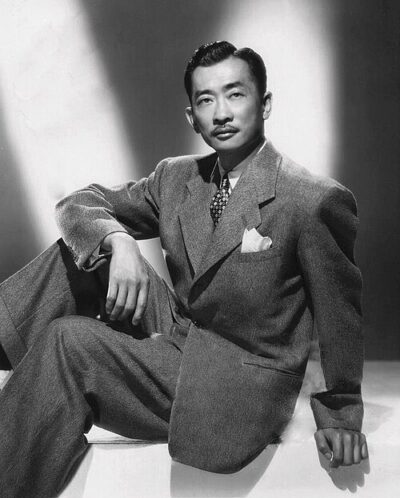
Richard Loo
Richard Loo was an American character actor. Born October 1, 1903, in Maui. Died November 20, 1983, in Los Angeles. Educated at University of California, Berkeley.
Facts
12 facts · 2 confirmed by two sources · 1 cited · 9 from one source
Where this comes from
Papalocal keeps its own record. It started from these sources; what each one said is kept here as it was copied, so a change on their side never changes this page by itself. Tap one to read its version.
What Wikidata says · copied November 18, 2026 · revision 2539215729
- Described as
- American character actor (1903–1983)
- Born
- October 1, 1903 · 4 references
- Died
- November 20, 1983 · 4 references
- Born in
- Maui
- Died in
- Los Angeles
- Buried in
- San Fernando Mission Cemetery
- Citizen of
- United States
- Occupation
- actor · 1 reference; television actor; film actor
- Education
- University of California, Berkeley
- Children
- Beverly Jane Loo
- Religion
- Catholic Church
- Wikipedias with a page
- 17
Wikidata item Q352701 (wikidata.org/wiki/Q352701), public domain (CC0). Copied November 18, 2026.
What Wikipedia says · copied November 18, 2026 · revision 1386471824
Richard Kuen Loo (October 1, 1903 – November 20, 1983) was an American actor. He was one of the most familiar Asian American character actors during the Golden Age of Hollywood, appearing in numerous films of the 1930s through the 1950s. Though of Chinese ancestry, he often portrayed villainous Imperial Japanese military officers during the Second World War. Later in his career, he was active mainly on television.
- Born, in its opening lines
- October 1, 1903
- Died, in its opening lines
- November 20, 1983
From the Wikipedia article “Richard Loo” (en.wikipedia.org/wiki/Richard_Loo), by its contributors, under CC BY-SA 4.0 (creativecommons.org/licenses/by-sa/4.0/). Copied November 18, 2026; not changed.
Confirmed Two sources agree. Cited One source, and it names where it got it. One source One source, without a reference of its own. Sources disagree The sources disagree. We show the best-supported value and keep theirs below.
