
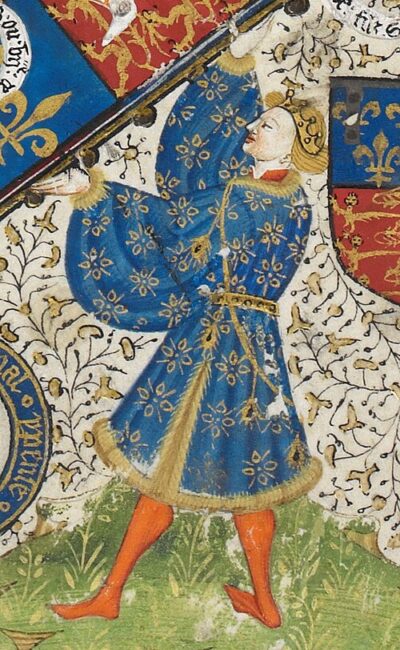
Richard of York, 3rd Duke of York
Richard of York, 3rd Duke of York was a Duke of York. Born September 21, 1411, in Kings Langley. Died December 30, 1460, in Battle of Wakefield. Positions held include Lord Lieutenant of Ireland (1447–1459), Lord High Constable of England (1455–1456) and Chief Commissioner (1442–). Awards include Knight of the Garter and Knight Bachelor.
Facts
34 facts · 2 confirmed by two sources · 27 cited · 4 from one source · 1 where the sources disagree
What’s different
- Buried in: we show Church of St Mary and All Saints, Fotheringhay (Sources disagree). Wikidata also lists Pontefract Castle
Where this comes from
Papalocal keeps its own record. It started from these sources; what each one said is kept here as it was copied, so a change on their side never changes this page by itself. Tap one to read its version.
What Wikidata says · copied November 16, 2026 · revision 2561479480
- Described as
- Duke of York (1411-1461)
- Other names
- Richard Plantagenet, Duke of York, Richard of York, Richard, Duke of York, Richard, 3rd Duke of York, Richard Plantagenet, 3rd Duke of York, Richard Plantagenet
- Born
- September 21, 1411 · 2 references
- Died
- December 30, 1460 · 1 reference
- Born in
- Kings Langley · 1 reference
- Died in
- Battle of Wakefield
- Buried in
- Church of St Mary and All Saints, Fotheringhay · 1 reference; Pontefract Castle · 1 reference
- Citizen of
- Kingdom of England
- Occupation
- politician
- Positions held
- Lord Lieutenant of Ireland (1447–1459) · 1 reference; Lord High Constable of England (1455–1456) · 1 reference; Chief Commissioner (1442–) · 1 reference; Justice in Eyre (1447–1453) · 1 reference; constable (1451–) · 1 reference; steward · 1 reference; warden · 1 reference; regent (1454–1456) · 1 reference
- Awards
- Knight of the Garter (1433–) · 2 references; Knight Bachelor (1426–) · 1 reference
- Spouse
- Cecily Neville, Duchess of York (–1460) · 3 references
- Children
- Anne of York, Duchess of Exeter · 1 reference; Edward IV of England · 1 reference; Edmund, Earl of Rutland · 1 reference; George Plantagenet, 1st Duke of Clarence · 1 reference; Richard III of England · 1 reference; Joan of York · 2 references; Henry of York · 1 reference; Margaret of York · 2 references; William Plantagenet · 1 reference; John Plantagenet · 1 reference; Thomas Plantagenet of York · 1 reference; Ursula Plantagenet · 1 reference
- Father
- Richard of Conisburgh, 3rd Earl of Cambridge · 1 reference
- Mother
- Anne Mortimer, Countess of Cambridge · 1 reference
- Siblings
- Isabel of Cambridge, Countess of Essex · 1 reference
- Nickname
- Richard of York · 1 reference
- Wikipedias with a page
- 41
Wikidata item Q312137 (wikidata.org/wiki/Q312137), public domain (CC0). Copied November 16, 2026.
What Wikipedia says · copied November 16, 2026 · revision 1383781520
Richard of York, 3rd Duke of York (21 September 1411 – 30 December 1460), also named Richard Plantagenet, was a leading English magnate and claimant to the throne during the Wars of the Roses. He was a member of the ruling House of Plantagenet by virtue of being a direct male-line descendant of Edmund of Langley, King Edward III's fourth surviving son. However, it was through his mother, Anne Mortimer, a descendant of Edward III's second surviving son, Lionel of Antwerp, that Richard inherited his strongest claim to the throne, as the opposing House of Lancaster was descended from John of Gaunt, Duke of Lancaster, the third surviving son of Edward III. He also inherited vast estates and served in various offices of state in Ireland, France and England, a country he ultimately governed as Lord Protector due to the mental instability of King Henry VI.
Richard's conflicts with Henry's wife, Margaret of Anjou, and other members of Henry's court, such as Edmund Beaufort, 2nd Duke of Somerset, and his competing claim to the throne, were leading factors in the political upheaval of mid-fifteenth-century England, and a major cause of the Wars of the Roses (1455–1487). Richard eventually attempted to take the throne, but was dissuaded, although it was agreed that he would become king on Henry's death. However, within weeks of securing this agreement (the Act of Accord), he was killed at the Battle of Wakefield in 1460, alongside his son, Edmund. Two of his surviving sons later ascended the throne: Edward IV and Richard III.
- Born, in its opening lines
- September 21, 1411
- Died, in its opening lines
- December 30, 1460
From the Wikipedia article “Richard of York, 3rd Duke of York” (en.wikipedia.org/wiki/Richard_of_York,_3rd_Duke_of_York), by its contributors, under CC BY-SA 4.0 (creativecommons.org/licenses/by-sa/4.0/). Copied November 16, 2026; not changed.
Confirmed Two sources agree. Cited One source, and it names where it got it. One source One source, without a reference of its own. Sources disagree The sources disagree. We show the best-supported value and keep theirs below.
