
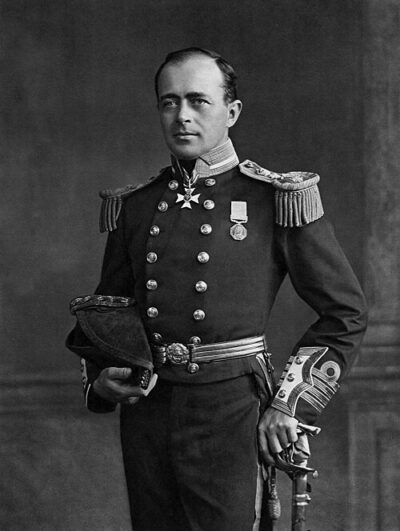
Robert Falcon Scott
Robert Falcon Scott was a Royal Navy officer and explorer. Born June 6, 1868, in Plymouth. Died March 29, 1912, in Ross Ice Shelf. Educated at Stubbington House School. Awards include Officer of the Legion of Honour, Commander of the Royal Victorian Order and Vega Medal.
Facts
28 facts · 2 confirmed by two sources · 8 cited · 17 from one source · 1 where the sources disagree
What’s different
- Cause of death: we show hypothermia (Sources disagree). Wikidata also lists cachexia
Where this comes from
Papalocal keeps its own record. It started from these sources; what each one said is kept here as it was copied, so a change on their side never changes this page by itself. Tap one to read its version.
What Wikidata says · copied November 16, 2026 · revision 2567485929
- Described as
- Royal Navy officer and explorer (1868–1912)
- Other names
- Captain R. F. Scott, R. F. Scott, Captain Scott
- Born
- June 6, 1868 · 10 references
- Died
- March 29, 1912 · 8 references
- Born in
- Plymouth · 1 reference
- Died in
- Ross Ice Shelf · 1 reference
- Cause of death
- hypothermia; cachexia
- Citizen of
- United Kingdom of Great Britain and Ireland
- Occupation
- explorer; naval officer; non-fiction writer; captain · 1 reference; polar explorer · 1 reference
- Education
- Stubbington House School (1880–)
- Awards
- Officer of the Legion of Honour; Commander of the Royal Victorian Order; Vega Medal (1905); Patron’s Medal (1904) · 1 reference; Cullum Geographical Medal (1906); Polar Medal; Livingstone Medal; Royal Victorian Order · 1 reference; Royal Medal · 1 reference
- Spouse
- Kathleen Scott (1908–) · 2 references
- Children
- Peter Scott · 2 references
- Father
- John Edward Scott · 2 references
- Mother
- Hannah Cuming · 1 reference
- Siblings
- Ettie Ellison-Macartney
- Military branch
- Royal Navy
- Military rank
- captain
- Wikipedias with a page
- 82
Wikidata item Q102527 (wikidata.org/wiki/Q102527), public domain (CC0). Copied November 16, 2026.
What Wikipedia says · copied November 16, 2026 · revision 1385196344
Captain Robert Falcon Scott (6 June 1868 – c. 29 March 1912) was a British naval officer and explorer who led two expeditions to the Antarctic regions: the Discovery Expedition of 1901–1904 and the Terra Nova Expedition of 1910–1913.
On the first expedition, Scott set a new southern record by marching to latitude 82°S and discovered the Antarctic Plateau, on which the South Pole is located. On the second venture, Scott led a party of five which reached the South Pole on 17 January 1912, less than five weeks after Amundsen's South Pole expedition. On the return journey from the Pole, a planned meeting with supporting dog teams from the base camp failed, despite Scott's written instructions, and at a distance of 162 miles (261 km) from their base camp at Hut Point and approximately 12.5 miles (20.1 km) from the next depot, Scott and his companions died. When Scott and his party's bodies were discovered, they had in their possession the first Antarctic fossils discovered. The fossils were determined to be from the Glossopteris tree and proved that Antarctica was once forested and joined to other continents.
Before his appointment to lead the Discovery Expedition, Scott had a career as a Royal Navy officer. In 1899, he had a chance encounter with Sir Clements Markham, the president of the Royal Geographical Society (RGS), and learned of a planned Antarctic expedition, which he soon volunteered to lead. His name became inseparably associated with the Antarctic, the field of work to which he remained committed during the final years of his life.
Following the news of his death, Scott became a celebrated hero, a status reflected by memorials erected across the UK. However, in the last decades of the 20th century, questions were raised about his competence and character. Commentators in the 21st century have regarded Scott more positively after assessing the temperature drop below −40 °C (−40 °F) in March 1912, and after re-discovering Scott's written orders of October 1911, in which he had instructed the dog teams to meet and assist him on the return trip.
- Born, in its opening lines
- June 6, 1868
- Died, in its opening lines
- March 29, 1912
From the Wikipedia article “Robert Falcon Scott” (en.wikipedia.org/wiki/Robert_Falcon_Scott), by its contributors, under CC BY-SA 4.0 (creativecommons.org/licenses/by-sa/4.0/). Copied November 16, 2026; not changed.
Confirmed Two sources agree. Cited One source, and it names where it got it. One source One source, without a reference of its own. Sources disagree The sources disagree. We show the best-supported value and keep theirs below.
