
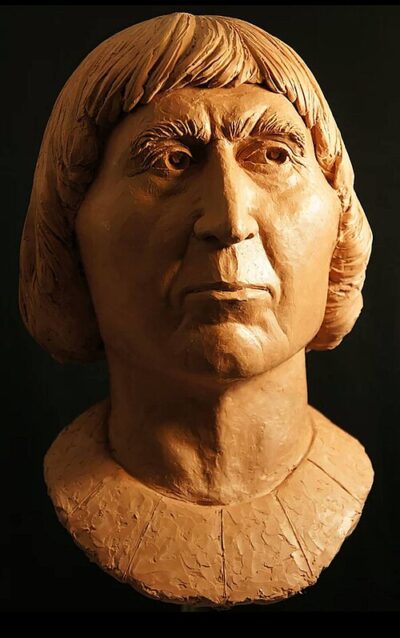
Robert I of Scotland
Robert I of Scotland was a King of Scotland. Born July 11, 1274, in Turnberry Castle. Died June 7, 1329, in Cardross. Positions held include Monarch of Scotland (1306–1329) and Earl of Carrick (1292–1314).
Facts
36 facts · 2 confirmed by two sources · 7 cited · 26 from one source · 1 where the sources disagree
What’s different
- Buried in: we show Dunfermline Abbey (Sources disagree). Wikidata also lists Melrose Abbey
Where this comes from
Papalocal keeps its own record. It started from these sources; what each one said is kept here as it was copied, so a change on their side never changes this page by itself. Tap one to read its version.
What Wikidata says · copied November 16, 2026 · revision 2567934719
- Described as
- King of Scotland (1306–1329)
- Other names
- Robert the Bruce, Robert I, Robert Bruce
- Born
- July 11, 1274 · 1 reference
- Died
- June 7, 1329 · 1 reference
- Born in
- Turnberry Castle
- Died in
- Cardross
- Buried in
- Dunfermline Abbey; Melrose Abbey
- Cause of death
- leprosy · 1 reference
- Citizen of
- Kingdom of Scotland
- Occupation
- warrior; monarch · 1 reference
- Positions held
- Monarch of Scotland (1306–1329); Earl of Carrick (1292–1314)
- Spouse
- Isabella of Mar (1295–) · 1 reference; Elizabeth de Burgh (1302–) · 2 references
- Children
- Marjorie Bruce; David II of Scotland · 2 references; Margaret Bruce; Robert Bruce, Lord of Liddesdale · 1 reference; Maud Bruce; John Bruce; Walter Bruce; Margaret Bruce; Catherine Bruce; Elizabeth Bruce; Christina Bruce; Neil Bruce
- Father
- Robert de Brus, 6th Lord of Annandale · 1 reference
- Mother
- Marjorie, Countess of Carrick · 1 reference
- Siblings
- Thomas de Brus; Edward Bruce; Alexander de Brus; Nigel de Brus; Isabel Bruce; Christina Bruce; Mary Bruce; Elizabeth Bruce
- Religion
- Catholicism
- Wikipedias with a page
- 75
Wikidata item Q187312 (wikidata.org/wiki/Q187312), public domain (CC0). Copied November 16, 2026.
What Wikipedia says · copied November 16, 2026 · revision 1380896254
Robert I (11 July 1274 – 7 June 1329), popularly known as Robert the Bruce (Scottish Gaelic: Raibeart am Brusach), was King of Scots from 1306 until his death in 1329. Robert led Scotland during the First War of Scottish Independence against England. He fought successfully during his reign to restore Scotland to an independent kingdom and is regarded in Scotland as a national hero. Robert was a fourth-great-grandson of King David I of Scotland, and his grandfather, Robert de Brus, 5th Lord of Annandale, was one of the claimants to the Scottish throne during the "Great Cause".
As Earl of Carrick, Robert the Bruce supported his family's claim to the Scottish throne and took part in William Wallace's campaign against Edward I of England. Appointed in 1298 as a Guardian of Scotland alongside his chief rival for the throne, John Comyn of Badenoch, and William Lamberton, Bishop of St Andrews, Robert resigned in 1300 because of his quarrels with Comyn and the apparently imminent restoration of John Balliol to the Scottish throne. After submitting to Edward I in 1302 and returning to "the king's peace", Robert inherited his family's claim to the Scottish throne upon his father's death.
Bruce's involvement in John Comyn's murder in February 1306 led to his excommunication by Pope Clement V (although he received absolution from Robert Wishart, Bishop of Glasgow). Bruce moved quickly to seize the throne and was crowned king of Scots on 25 March 1306. Edward I's forces defeated Robert in the Battle of Methven, forcing him to flee into hiding, before re-emerging in 1307 to defeat an English army at Loudoun Hill and wage a highly successful guerrilla war against the English.
Robert I defeated his other opponents, destroying their strongholds and devastating their lands, and in 1309 held his first parliament. A series of military victories between 1310 and 1314 won him control of much of Scotland, and at the Battle of Bannockburn in 1314, Robert defeated a much larger English army under Edward II of England, confirming the re-establishment of an independent Scottish kingdom. The battle marked a significant turning point, with Robert's armies now free to launch devastating raids throughout northern England, while he also expanded the war against England by sending armies to invade Ireland, and appealed to the Irish to rise against Edward II's rule.
Despite Bannockburn and the capture of the final English stronghold at Berwick in 1318, Edward II refused to renounce his claim to the overlordship of Scotland. In 1320, the Scottish nobility submitted the Declaration of Arbroath to Pope John XXII, declaring Robert as their rightful monarch and asserting Scotland's status as an independent kingdom. In 1324, the Pope recognised Robert I as king of an independent Scotland, and in 1326, the Franco-Scottish alliance was renewed in the Treaty of Corbeil. In 1327, the English deposed Edward II in favour of his son, Edward III, and peace was concluded between Scotland and England with the Treaty of Edinburgh–Northampton in 1328, by which Edward III renounced all claims to sovereignty over Scotland.
Robert I died in June 1329 and was succeeded by his son, David II. Robert's body is buried in Dunfermline Abbey, while his heart was interred in Melrose Abbey, and his internal organs were embalmed and placed in St Serf's Church, Dumbarton.
- Born, in its opening lines
- July 11, 1274
- Died, in its opening lines
- June 7, 1329
From the Wikipedia article “Robert the Bruce” (en.wikipedia.org/wiki/Robert_the_Bruce), by its contributors, under CC BY-SA 4.0 (creativecommons.org/licenses/by-sa/4.0/). Copied November 16, 2026; not changed.
Confirmed Two sources agree. Cited One source, and it names where it got it. One source One source, without a reference of its own. Sources disagree The sources disagree. We show the best-supported value and keep theirs below.
