leprosy
Leprosy is a chronic infection caused by bacteria Mycobacterium leprae.
All 2 facts, and where they come from
Facts
2 facts · 0 confirmed by two sources · 0 cited · 2 from one source
Where this comes from
Papalocal keeps its own record. It started from these sources; what each one said is kept here as it was copied, so a change on their side never changes this page by itself. Tap one to read its version.
What Wikidata says · copied November 17, 2026 · revision 2567795388
- Described as
- chronic infection caused by bacteria Mycobacterium leprae
- Other names
- Hansen's disease, lepras
- What it is
- type of disease
- Named after
- Gerhard Armauer Hansen
- Wikipedias with a page
- 146
Wikidata item Q36956 (wikidata.org/wiki/Q36956), public domain (CC0). Copied 2026-11-17.
What Wikipedia says · copied November 17, 2026 · revision 1383948702
Leprosy, also known as Hansen's disease (HD), is a long-term infection by the bacterium Mycobacterium leprae or Mycobacterium lepromatosis. Infection can lead to damage of the nerves, respiratory tract, skin, and eyes. This nerve damage may result in the loss of nociception (the ability to feel physical pain), which can lead to the loss of parts of a person's extremities from repeated injuries or infection through unnoticed wounds. An infected person may also experience muscle weakness and loss of eyesight. Leprosy symptoms may begin within one year or take 20 years or more.
Leprosy is spread between people, although extensive contact is necessary. Leprosy has a low pathogenicity, and 95% of people who contract or who are exposed to M. leprae do not develop the disease. Spread is likely through a cough or contact with fluid from the nose of a person infected by leprosy. Genetic factors and baseline immune function play a role in how easily a person catches the disease. Leprosy is not spread during pregnancy to the unborn child or through sexual genital contact. There are two main types of the disease—paucibacillary and multibacillary, which differ in the number of bacteria present. A person with paucibacillary disease has five or fewer poorly pigmented, numb skin patches, while a person with multibacillary disease has more than five skin patches. The diagnosis is confirmed by finding acid-fast bacilli in a biopsy of the skin.
Leprosy is curable with multidrug therapy. Treatment of paucibacillary leprosy is with the medications dapsone, rifampicin, and clofazimine for six months. Treatment for multibacillary leprosy uses the same medications for 12 months. Several other antibiotics may also be used. These treatments are provided free of charge by the World Health Organization.
Leprosy is not highly contagious. People with leprosy can live with their families and attend school and work. In the 1980s, there were 5.2 million cases globally, but by 2020 this decreased to fewer than 200,000. Most new cases occur in one of 14 countries, with India accounting for more than half of all new cases. In the 20 years from 1994 to 2014, 16 million people worldwide were cured of leprosy. Separating people affected by leprosy by placing them in leper colonies is not supported by evidence but as of the late 2000s was still occurring in some areas of India, China, Japan, Africa, and Thailand.
Leprosy has affected humanity for thousands of years. The disease takes its name from the Greek word λέπρα (lépra), from λεπίς (lepís; 'scale'), while the term "Hansen's disease" is named after the Norwegian physician Gerhard Armauer Hansen. Leprosy has historically been associated with social stigma, which continues to be a barrier to self-reporting and early treatment. Leprosy is classified as a neglected tropical disease. World Leprosy Day was started in 1954 to draw awareness to those affected by leprosy.
The study of leprosy and its treatment is known as leprology.
From the Wikipedia article “Leprosy” (en.wikipedia.org/wiki/Leprosy), by its contributors, under CC BY-SA 4.0 (creativecommons.org/licenses/by-sa/4.0/). Copied 2026-11-17; not changed.
Confirmed Two sources agree. Cited One source, and it names where it got it. One source One source, without a reference of its own. Sources disagree The sources disagree. We show the best-supported value and keep theirs below.
Picture: Wikimedia Commons: Leprosy.jpg · See Commons file page
People connected 11
Cause of death
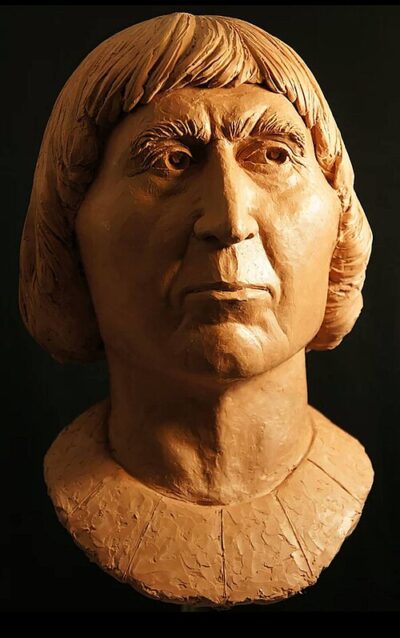 Robert I of ScotlandKing of Scotland (1306–1329)
 Afonso II of PortugalKing of Portugal
 Sancho I of PortugalKing of Portugal (1185–1211)
 Baldwin IV of JerusalemKing of Jerusalem (1161-1185) (r. 1174-1185)
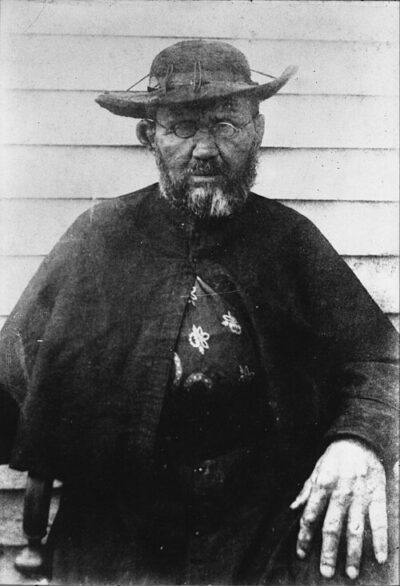 Father Damien19th century Belgian Roman Catholic priest and saint (1840–1889)
 Henry (VII) of GermanyGerman king (1220-1235)
 Fruela II of AsturiasKing of Asturias, León and Galicia
 Jean BodelOld French poet
 AleijadinhoColonial Brazil-born sculptor and architect (c.1738-1814)