
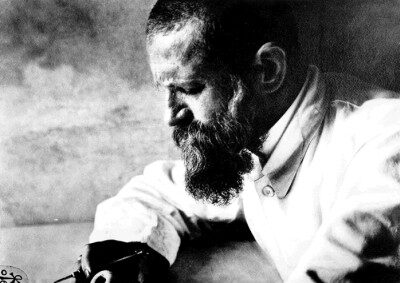
Robert Koldewey
Robert Koldewey was a German archaeologist and architect. Born September 10, 1855, in Blankenburg. Died February 4, 1925, in Berlin. Educated at Christianeum. Awards include Leibniz Medal and honorary doctor of the University of Freiburg.
Facts
22 facts · 2 confirmed by two sources · 7 cited · 13 from one source
Where this comes from
Papalocal keeps its own record. It started from these sources; what each one said is kept here as it was copied, so a change on their side never changes this page by itself. Tap one to read its version.
What Wikidata says · copied November 16, 2026 · revision 2569066641
- Described as
- German archaeologist and architect (1855-1925)
- Other names
- Robert Johann Koldewey
- Born
- September 10, 1855 · 4 references
- Died
- February 4, 1925 · 4 references
- Born in
- Blankenburg · 1 reference
- Died in
- Berlin · 2 references
- Buried in
- Parkfriedhof Lichterfelde · 1 reference
- Citizen of
- Duchy of Brunswick; German Reich
- Occupation
- archaeologist · 2 references; architectural historian; architect · 2 references; assyriologist; building researcher · 1 reference; art historian · 1 reference
- Worked for
- Vorderasiatisches Museum Berlin
- Education
- Christianeum
- Member of
- German Archaeological Institute
- Awards
- Leibniz Medal (1910); honorary doctor of the University of Freiburg
- Field
- architecture; buildings archaeology; classical archaeology; Near Eastern archaeology
- Wikipedias with a page
- 31
Wikidata item Q60700 (wikidata.org/wiki/Q60700), public domain (CC0). Copied November 16, 2026.
What Wikipedia says · copied November 16, 2026 · revision 1371990704
Robert Johann Koldewey (10 September 1855 – 4 February 1925) was a German archaeologist, famous for his in-depth excavation of the ancient city of Babylon in modern-day Iraq. He was born in Blankenburg am Harz in Germany, the duchy of Brunswick, and died in Berlin at the age of 69.
His digs at Babylon revealed the foundations of the ziggurat Marduk, and the Ishtar Gate; he also developed several modern archaeological techniques including a method to identify and excavate mud brick architecture. This technique was particularly useful in his excavation of the Hanging Gardens of Babylon (1899–1917) which were built ca. 580 BC using mainly unfired mudbricks.
A practicing archaeologist for most of his life, he participated in and led many excavations in Asia Minor, Greece, and Italy. After he died, the Koldewey Society was established to record and mark his architectural service.
- Born, in its opening lines
- September 10, 1855
- Died, in its opening lines
- February 4, 1925
From the Wikipedia article “Robert Koldewey” (en.wikipedia.org/wiki/Robert_Koldewey), by its contributors, under CC BY-SA 4.0 (creativecommons.org/licenses/by-sa/4.0/). Copied November 16, 2026; not changed.
Confirmed Two sources agree. Cited One source, and it names where it got it. One source One source, without a reference of its own. Sources disagree The sources disagree. We show the best-supported value and keep theirs below.
