
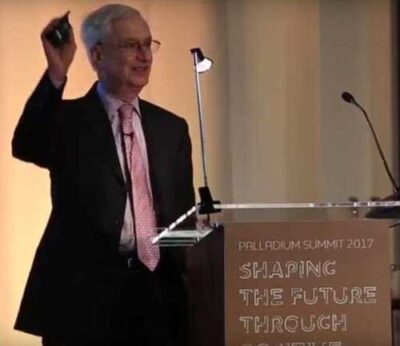
Robert S. Kaplan is an American accounting academic. Born May 2, 1940, in New York City. Educated at Cornell University and Massachusetts Institute of Technology. Awards include honorary doctorate from the University of Waterloo, honorary doctor of the University of Stuttgart and honorary doctor of the University of Łódź.
Facts
14 facts · 0 confirmed by two sources · 2 cited · 12 from one source
Where this comes from
Papalocal keeps its own record. It started from these sources; what each one said is kept here as it was copied, so a change on their side never changes this page by itself. Tap one to read its version.
What Wikidata says · copied November 18, 2026 · revision 2567318646
- Described as
- American accounting academic
- Other names
- Robert Samuel Kaplan
- Born
- May 2, 1940 · 2 references
- Born in
- New York City
- Name at birth
- Robert Samuel Kaplan
- Citizen of
- United States
- Occupation
- economist · 1 reference; university teacher
- Worked for
- Harvard Business School; Carnegie Mellon University
- Education
- Cornell University; Massachusetts Institute of Technology; Samuel Curtis Johnson Graduate School of Management
- Awards
- honorary doctorate from the University of Waterloo; honorary doctor of the University of Stuttgart; honorary doctor of the University of Łódź (2006)
- Wikipedias with a page
- 15
Wikidata item Q631376 (wikidata.org/wiki/Q631376), public domain (CC0). Copied November 18, 2026.
What Wikipedia says · copied November 18, 2026 · revision 1380331007
Robert Samuel Kaplan (born 1940) is an American accounting academic, and Emeritus Professor of Leadership Development at the Harvard Business School. He is known as co-creator of Balanced Scorecard. together with David P. Norton.
From the Wikipedia article “Robert S. Kaplan” (en.wikipedia.org/wiki/Robert_S._Kaplan), by its contributors, under CC BY-SA 4.0 (creativecommons.org/licenses/by-sa/4.0/). Copied November 18, 2026; not changed.
Confirmed Two sources agree. Cited One source, and it names where it got it. One source One source, without a reference of its own. Sources disagree The sources disagree. We show the best-supported value and keep theirs below.
