
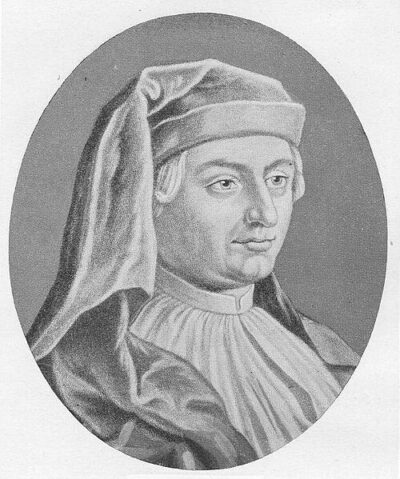
Rodolphus Agricola
Rodolphus Agricola was a Dutch humanist. Born August 28, 1443, in Baflo. Died October 27, 1485, in Heidelberg. Educated at Old University of Leuven.
Facts
14 facts · 2 confirmed by two sources · 3 cited · 9 from one source
What’s different
- Born: we show August 28, 1443 (Confirmed). Wikidata also lists February 17, 1444
- Died: we show October 27, 1485 (Confirmed). Wikidata also lists October 28, 1485
Where this comes from
Papalocal keeps its own record. It started from these sources; what each one said is kept here as it was copied, so a change on their side never changes this page by itself. Tap one to read its version.
What Wikidata says · copied November 16, 2026 · revision 2567651916
- Described as
- Dutch humanist (1443-1485)
- Other names
- Rudolphus Agricola, Rudolf Agricola
- Born
- August 28, 1443 · 2 references; February 17, 1444 · 2 references
- Died
- October 27, 1485 · 7 references; October 28, 1485 · 1 reference
- Born in
- Baflo · 1 reference
- Died in
- Heidelberg · 3 references
- Citizen of
- Habsburg Netherlands
- Occupation
- philosopher; composer · 1 reference; writer · 1 reference; poet · 1 reference; university teacher · 2 references
- Worked for
- Heidelberg University
- Education
- Old University of Leuven
- Member of
- Aduarder Kring
- Field
- philosophy
- Wikipedias with a page
- 36
Wikidata item Q365557 (wikidata.org/wiki/Q365557), public domain (CC0). Copied November 16, 2026.
What Wikipedia says · copied November 16, 2026 · revision 1385563452
Rodolphus Agricola (August 28, 1443 – October 27, 1485) was a Dutch humanist scholar recognized as the "father of Northern European humanism" for his role in introducing the Italian Renaissance's intellectual disciplines to the North. Known for his mastery of Latin, Greek, and Hebrew, he was a versatile figure who excelled as an organist, poet, and orator, though he preferred the life of an independent scholar over institutional ties. His most important work, De inventione dialectica (1479), influenced the field of logic by shifting the focus from rigid scholastic reasoning to practical argumentation and rhetoric, profoundly impacting later thinkers like Erasmus, who regarded him as a "truly divine man."
- Born, in its opening lines
- August 28, 1443
- Died, in its opening lines
- October 27, 1485
From the Wikipedia article “Rodolphus Agricola” (en.wikipedia.org/wiki/Rodolphus_Agricola), by its contributors, under CC BY-SA 4.0 (creativecommons.org/licenses/by-sa/4.0/). Copied November 16, 2026; not changed.
Confirmed Two sources agree. Cited One source, and it names where it got it. One source One source, without a reference of its own. Sources disagree The sources disagree. We show the best-supported value and keep theirs below.
