
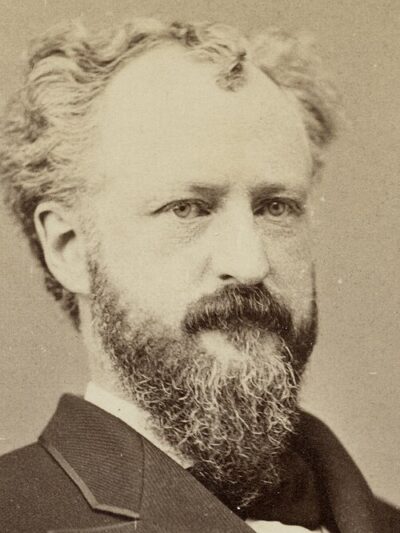
Roscoe Conkling
Roscoe Conkling was an American politician. Born October 30, 1829, in Albany. Died April 18, 1888, in Manhattan. Positions held include United States representative and United States senator (1867–1881). Educated at Auburn Academy High School.
Facts
15 facts · 2 confirmed by two sources · 5 cited · 8 from one source
Where this comes from
Papalocal keeps its own record. It started from these sources; what each one said is kept here as it was copied, so a change on their side never changes this page by itself. Tap one to read its version.
What Wikidata says · copied November 18, 2026 · revision 2567547888
- Described as
- American politician (1829–1888)
- Born
- October 30, 1829 · 3 references
- Died
- April 18, 1888 · 3 references
- Born in
- Albany · 1 reference
- Died in
- Manhattan · 1 reference
- Buried in
- Forest Hill Cemetery · 1 reference
- Citizen of
- United States
- Occupation
- politician · 1 reference; lawyer
- Positions held
- United States representative; United States senator (1867–1881) · 1 reference
- Political party
- Republican Party
- Education
- Auburn Academy High School
- Spouse
- Julia Catherine Seymour Conkling
- Father
- Alfred Conkling
- Siblings
- Margaret Cockburn Conkling
- Wikipedias with a page
- 18
Wikidata item Q5611358 (wikidata.org/wiki/Q5611358), public domain (CC0). Copied November 18, 2026.
What Wikipedia says · copied November 18, 2026 · revision 1378352775
Roscoe Conkling (October 30, 1829 – April 18, 1888) was an American lawyer and Republican politician who represented New York in the United States House of Representatives and the United States Senate. He was a leader of the Republican Stalwart faction and a dominant figure in the United States Senate during the 1870s. As senator, his control of patronage at the New York Customs House, one of the busiest commercial ports in the world, made him very powerful. His comity with President Ulysses S. Grant and conflict with Presidents Rutherford B. Hayes and James A. Garfield were defining features of American politics of the 1870s and 1880s. He also participated, as a member of the Joint Committee on Reconstruction, in the drafting of the landmark Fourteenth Amendment to the United States Constitution.
Conkling publicly led opposition to proposals for civil service reform, which he called "snivel service reform," and defended the prerogatives of senators in appointments. His conflict with President Garfield over appointments eventually led to Conkling's resignation in 1881. He ran for reelection in an attempt to display his support from the New York political machine and his power, but lost the special election, during which Garfield was assassinated. Though Conkling never returned to elected office, the assassination elevated Chester A. Arthur, a former New York Collector and Conkling ally, to the presidency. Their relationship was destroyed when Arthur pursued civil service reform, out of his sense of duty to the late President Garfield. Conkling remained active in politics and practiced law in New York City until his death in 1888.
Conkling turned down two presidential appointments to the United States Supreme Court: first to the position of Chief Justice in 1873 and then as an associate justice in 1882. In 1882, Conkling was confirmed by the Senate but declined to serve.
Conkling, who was temperate and detested tobacco, was known for his physical condition, maintained through regular exercise and boxing, an unusual hobby for his time.
- Born, in its opening lines
- October 30, 1829
- Died, in its opening lines
- April 18, 1888
From the Wikipedia article “Roscoe Conkling” (en.wikipedia.org/wiki/Roscoe_Conkling), by its contributors, under CC BY-SA 4.0 (creativecommons.org/licenses/by-sa/4.0/). Copied November 18, 2026; not changed.
Confirmed Two sources agree. Cited One source, and it names where it got it. One source One source, without a reference of its own. Sources disagree The sources disagree. We show the best-supported value and keep theirs below.
