
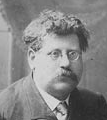
Rudolf Rocker
Rudolf Rocker was a German anarcho-syndicalist writer and activist. Born March 25, 1873, in Mainz. Died September 19, 1958, in New York City. Known for Nationalism and Culture, Anarcho-Syndicalism and Pioneers of American Freedom.
Facts
26 facts · 2 confirmed by two sources · 5 cited · 18 from one source · 1 where the sources disagree
What’s different
- Born: we show March 25, 1873 (Confirmed). Wikidata also lists 1873
- Died in: we show New York City (Sources disagree). Wikidata also lists Mohegan Colony
Where this comes from
Papalocal keeps its own record. It started from these sources; what each one said is kept here as it was copied, so a change on their side never changes this page by itself. Tap one to read its version.
What Wikidata says · copied November 16, 2026 · revision 2563982014
- Described as
- German anarcho-syndicalist writer and activist (1873-1958)
- Born
- March 25, 1873 · 3 references; 1873 · 1 reference
- Died
- September 19, 1958 · 1 reference
- Born in
- Mainz · 2 references
- Died in
- Mohegan Colony; New York City · 1 reference
- Citizen of
- Germany · 1 reference
- Occupation
- historian; writer; economist; journalist; trade unionist; politician · 2 references; anarchist · 2 references
- Political party
- Social Democratic Party of Germany (–1891)
- Member of
- International Workers' Association – Asociación Internacional de los Trabajadores; Free Workers' Union of Germany
- Known for
- Nationalism and Culture; Anarcho-Syndicalism; Pioneers of American Freedom; Max Nettlau
- Spouse
- Milly Witkop
- Children
- Fermin Rocker · 1 reference
- Lived in
- Paris (1892–1895); Mainz (–1892); London; Berlin; New York City (1933–1937)
- Wikipedias with a page
- 35
Wikidata item Q213562 (wikidata.org/wiki/Q213562), public domain (CC0). Copied November 16, 2026.
What Wikipedia says · copied November 16, 2026 · revision 1376679848
Johann Rudolf Rocker (German: [ˈʁɔkɐ]; March 25, 1873 – September 19, 1958) was a German anarchist writer and activist. He was born in Mainz to an artisan family.
His father died when he was a child, and his mother when he was in his teens, so he spent some time in an orphanage. As a youth he worked as a cabin boy on river boats and was then apprenticed as a typographer. He became involved in trade unionism and joined the Social Democratic Party of Germany (SPD) before coming under the influence of anarchists such as Mikhail Bakunin and Peter Kropotkin. With other libertarian socialist youth, he was expelled from the SPD, and his anarchist activism led to him fleeing Germany for Paris, where he came into contact with syndicalist and anarchist ideas and practices. In 1895, he moved to London. Apart from brief spells in Liverpool and elsewhere, he remained in East London for most of the next two decades, acting a key figure in the Yiddish-language anarchist scene there, including editing the Arbeter Fraynd periodical, publishing the key thinkers of anarchism, and organising strikes in the garment industry. In London, he formed a life partnership with Milly Witkop, a Ukraine-born anarchist from a Jewish background. During World War I, he was interned as an enemy alien and at the end of the war he was deported to the Netherlands.
In the 1920s, he was mainly based in Germany, where he was one of the architects of the syndicalist Free Workers' Union of Germany (FAUD) and its organ Der Syndikalist and a founder of the International Workers' Association (IWA). He became increasingly concerned with the rise of nationalism and fascism (he began work on his magnum opus Nationalism and Culture in this period) and left Germany in 1933 for the United States. In the US, he was active with the Yiddish Freie Arbeiter Stimme group, and was particularly involved in libertarian education and in solidarity with the Spanish Revolution against its fascist and Stalinist enemies. His classics Nationalism and Culture and Anarcho-Syndicalism were published in the 1930s. Having opposed both sides in First World War, as an anti-fascist he supported the Allies in the Second World War. After the war, he published Pioneers of American Freedom, a series of essays detailing the history of liberal and anarchist thought in the United States, seeking to debunk the idea that radical thought was foreign to American history and culture and had merely been imported by immigrants.
- Born, in its opening lines
- March 25, 1873
- Died, in its opening lines
- September 19, 1958
From the Wikipedia article “Rudolf Rocker” (en.wikipedia.org/wiki/Rudolf_Rocker), by its contributors, under CC BY-SA 4.0 (creativecommons.org/licenses/by-sa/4.0/). Copied November 16, 2026; not changed.
Confirmed Two sources agree. Cited One source, and it names where it got it. One source One source, without a reference of its own. Sources disagree The sources disagree. We show the best-supported value and keep theirs below.
