
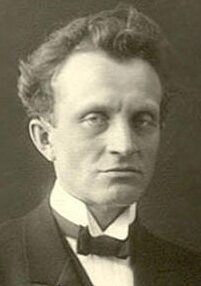
Rudolf Tobias
Rudolf Tobias was an Estonian composer. Born May 29, 1873, in Selja. Died October 29, 1918, in Wilmersdorf. Educated at Saint Petersburg Conservatory.
Facts
19 facts · 2 confirmed by two sources · 5 cited · 12 from one source
Where this comes from
Papalocal keeps its own record. It started from these sources; what each one said is kept here as it was copied, so a change on their side never changes this page by itself. Tap one to read its version.
What Wikidata says · copied November 18, 2026 · revision 2568385245
- Described as
- Estonian composer (1873-1918)
- Born
- May 29, 1873 · 2 references
- Died
- October 29, 1918 · 3 references
- Born in
- Selja · 1 reference
- Died in
- Wilmersdorf · 1 reference
- Cause of death
- pneumonia
- Citizen of
- Russian Empire; German Empire (1914–) · 1 reference; Estonia
- Occupation
- conductor; composer · 2 references; choir director; music educator; music teacher · 1 reference; musician · 1 reference
- Worked for
- Berlin University of the Arts
- Education
- Saint Petersburg Conservatory
- Genre
- classical music · 1 reference
- Instrument
- organ
- Children
- Helen Tobias-Duesberg
- Wikipedias with a page
- 22
Wikidata item Q1346393 (wikidata.org/wiki/Q1346393), public domain (CC0). Copied November 18, 2026.
What Wikipedia says · copied November 18, 2026 · revision 1375168388
Rudolf Tobias (29 May [O.S. 17 May] 1873 – 29 October 1918) was the first Estonian professional composer, as well as a professional organist. He studied at the Saint Petersburg Conservatory. His compositions include among others piano works, string quartets and an oratorio, Des Jona Sendung (Jonah's Mission) (1908, revised and premiered 1909, later reconstructed by Vardo Rumessen).
- Born, in its opening lines
- May 29, 1873
- Died, in its opening lines
- October 29, 1918
From the Wikipedia article “Rudolf Tobias” (en.wikipedia.org/wiki/Rudolf_Tobias), by its contributors, under CC BY-SA 4.0 (creativecommons.org/licenses/by-sa/4.0/). Copied November 18, 2026; not changed.
Confirmed Two sources agree. Cited One source, and it names where it got it. One source One source, without a reference of its own. Sources disagree The sources disagree. We show the best-supported value and keep theirs below.
