
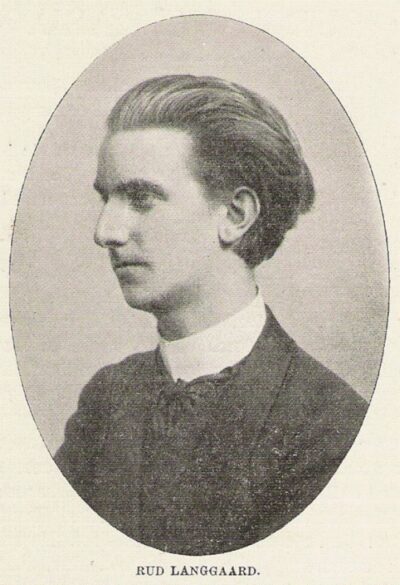
Rued Langgaard
Rued Langgaard was a Danish composer and organist. Born July 28, 1893, in Copenhagen. Died July 10, 1952, in Ribe. Known for Symphony No. 4, Music of the Spheres and Antikrist. Awards include Det Anckerske Legat.
Facts
17 facts · 2 confirmed by two sources · 3 cited · 12 from one source
Where this comes from
Papalocal keeps its own record. It started from these sources; what each one said is kept here as it was copied, so a change on their side never changes this page by itself. Tap one to read its version.
What Wikidata says · copied November 18, 2026 · revision 2567391795
- Described as
- Danish composer and organist (1893-1952)
- Born
- July 28, 1893 · 7 references
- Died
- July 10, 1952 · 7 references
- Born in
- Copenhagen · 2 references
- Died in
- Ribe · 1 reference
- Buried in
- Holmen Cemetery
- Citizen of
- Kingdom of Denmark
- Occupation
- composer · 1 reference; organist
- Genre
- opera; symphony
- Instrument
- organ
- Known for
- Symphony No. 4; Music of the Spheres; Antikrist
- Awards
- Det Anckerske Legat
- Father
- Siegfried Langgaard
- Website
- http://www.langgaard.dk
- Wikipedias with a page
- 22
Wikidata item Q149582 (wikidata.org/wiki/Q149582), public domain (CC0). Copied November 18, 2026.
What Wikipedia says · copied November 18, 2026 · revision 1385054038
Rued Langgaard (Danish: [ˈʁuðˀ ˈlɑŋˌkɒˀ]; born Rud Immanuel Langgaard; 28 July 1893 – 10 July 1952) was a late-Romantic Danish composer and organist. His then-unconventional music was at odds with that of his Danish contemporaries but was recognized 16 years after his death.
- Born, in its opening lines
- July 28, 1893
- Died, in its opening lines
- July 10, 1952
From the Wikipedia article “Rued Langgaard” (en.wikipedia.org/wiki/Rued_Langgaard), by its contributors, under CC BY-SA 4.0 (creativecommons.org/licenses/by-sa/4.0/). Copied November 18, 2026; not changed.
Confirmed Two sources agree. Cited One source, and it names where it got it. One source One source, without a reference of its own. Sources disagree The sources disagree. We show the best-supported value and keep theirs below.
