
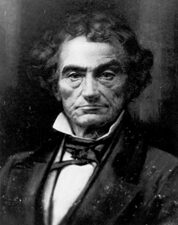
Rufus Choate
Rufus Choate was an American politician. Born October 1, 1799, in Ipswich. Died July 13, 1859, in Halifax. Positions held include United States representative (1831–1834), member of the Massachusetts House of Representatives and Massachusetts Attorney General (1853–1854). Educated at Dartmouth College and Harvard Law School.
Facts
27 facts · 2 confirmed by two sources · 6 cited · 19 from one source
Where this comes from
Papalocal keeps its own record. It started from these sources; what each one said is kept here as it was copied, so a change on their side never changes this page by itself. Tap one to read its version.
What Wikidata says · copied November 18, 2026 · revision 2568743435
- Described as
- American politician (1799–1859)
- Born
- October 1, 1799 · 2 references
- Died
- July 13, 1859 · 2 references
- Born in
- Ipswich
- Died in
- Halifax
- Buried in
- Mount Auburn Cemetery · 1 reference
- Citizen of
- United States
- Occupation
- politician; lawyer; writer · 1 reference
- Positions held
- United States representative (1831–1834); member of the Massachusetts House of Representatives; Massachusetts Attorney General (1853–1854); member of the State Senate of Massachusetts; United States senator (1841–1845) · 1 reference; board member (1846–1855); senator · 1 reference
- Political party
- Whig Party
- Education
- Dartmouth College; Harvard Law School
- Member of
- American Academy of Arts and Sciences; Phi Beta Kappa Society
- Children
- Rufus Choate Jr.; Miriam Foster Choate
- Father
- David Choate · 1 reference
- Siblings
- David Choate
- Lived in
- Massachusetts; Rufus Choate House (1825–1834) · 1 reference
- Wikipedias with a page
- 16
Wikidata item Q2174770 (wikidata.org/wiki/Q2174770), public domain (CC0). Copied November 18, 2026.
What Wikipedia says · copied November 18, 2026 · revision 1373178534
Rufus Choate () (October 1, 1799 – July 13, 1859) was an American lawyer, orator, and senator who represented Massachusetts as a member of the Whig Party. He is regarded as one of the greatest American lawyers of the 19th century, arguing over a thousand cases in a lifetime practice extending to virtually every branch of the law then recognized. Notably, he was one of the pioneers of the legal technique of arousing jury sympathy in tort cases. In one instance, he won a record judgement of $22,500 for a badly injured widow, the most ever awarded to a plaintiff at the time.
Along with his colleague and close associate Daniel Webster, he is also regarded as one of the greatest orators of his age. Among his most famous orations are his Address on The Colonial Age of New England delivered at the centennial celebration of the settlement of Ipswich, Massachusetts in 1831 and his Address on The Age of the Pilgrims as the Heroic Period of Our History before the New England Society of New York in 1843. Through these addresses, Choate became one of the most prominent advocates of promoting the Puritan settlers as the first founders of the American republic.
A staunch nationalist and unionist, Choate was among several former Whigs to oppose the Republican Party over concerns that it was a "sectional party" whose platform threatened to separate the Union. In turn, he publicly voiced his support for Democratic candidate James Buchanan over Republican John C. Frémont in the 1856 presidential election.
- Born, in its opening lines
- October 1, 1799
- Died, in its opening lines
- July 13, 1859
From the Wikipedia article “Rufus Choate” (en.wikipedia.org/wiki/Rufus_Choate), by its contributors, under CC BY-SA 4.0 (creativecommons.org/licenses/by-sa/4.0/). Copied November 18, 2026; not changed.
Confirmed Two sources agree. Cited One source, and it names where it got it. One source One source, without a reference of its own. Sources disagree The sources disagree. We show the best-supported value and keep theirs below.
