
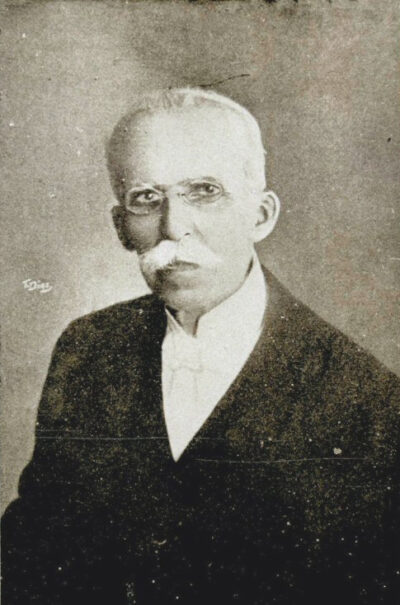
Ruy Barbosa
Ruy Barbosa was a Brazilian politician, writer and jurist. Born November 5, 1849, in Salvador. Died March 1, 1923, in Petrópolis. Positions held include provincial deputy of Bahia (1878), deputy of the General Assembly of Brazil for Bahia (1878–1884) and Bahia senator (1890–1922). Educated at Faculdade de Direito do Recife. Awards include Grand Cross of the Military Order of Saint James of the Sword and Livro dos Heróis e Heroínas da Pátria.
Facts
23 facts · 2 confirmed by two sources · 5 cited · 16 from one source
Where this comes from
Papalocal keeps its own record. It started from these sources; what each one said is kept here as it was copied, so a change on their side never changes this page by itself. Tap one to read its version.
What Wikidata says · copied November 17, 2026 · revision 2567358253
- Described as
- Brazilian politician, writer and jurist (1849–1923)
- Other names
- Ruy Barbosa de Oliveira
- Born
- November 5, 1849 · 6 references
- Died
- March 1, 1923 · 5 references
- Born in
- Salvador · 1 reference
- Died in
- Petrópolis · 1 reference
- Citizen of
- Brazil
- Occupation
- legal counselor; politician · 1 reference; lawyer; jurist · 1 reference; diplomat; translator; judge; minister
- Positions held
- provincial deputy of Bahia (1878); deputy of the General Assembly of Brazil for Bahia (1878–1884); Bahia senator (1890–1922); Minister of Finance of Brazil (1889–1891); ambassador of Brazil (1907)
- Education
- Faculdade de Direito do Recife
- Member of
- Brazilian Academy of Letters; Instituto dos Advogados da Bahia · 1 reference
- Awards
- Grand Cross of the Military Order of Saint James of the Sword · 1 reference; Livro dos Heróis e Heroínas da Pátria
- Wikipedias with a page
- 26
Wikidata item Q916935 (wikidata.org/wiki/Q916935), public domain (CC0). Copied November 17, 2026.
What Wikipedia says · copied November 17, 2026 · revision 1378274525
Ruy Barbosa de Oliveira (5 November 1849 – 1 March 1923), also known as Rui Barbosa, was a Brazilian politician, writer, jurist, philologist, journalist and diplomat.
A prominent defender of civil liberties who called for the abolition of slavery in Brazil, Barbosa represented Brazil in the second Hague convention, and argued for Brazil's participation in World War I on the side of the Allies. He also personally ordered the destruction of all government records pertaining to slavery while being Minister of Finance, as an effort to prevent previous slaveowners from receiving any sort of financial compensation. His defence of individual freedom led to his public condemning of communism and obligatory vaccinations.
Barbosa was a founding member of the Brazilian Academy of Letters, alongside names such as Machado de Assis, Viscount of Taunay, Joaquim Nabuco and Olavo Bilac. He would also act as a president for the organization from 1908 to 1919.
During the presidency of Floriano Peixoto, Barbosa was forced into exile due to the disastrous consequences of his policies in his time as Minister of Finance. After his exile, Barbosa ran for presidency multiple times, though, ultimately, all of this attempts would fail.
- Born, in its opening lines
- November 5, 1849
- Died, in its opening lines
- March 1, 1923
From the Wikipedia article “Ruy Barbosa” (en.wikipedia.org/wiki/Ruy_Barbosa), by its contributors, under CC BY-SA 4.0 (creativecommons.org/licenses/by-sa/4.0/). Copied November 17, 2026; not changed.
Confirmed Two sources agree. Cited One source, and it names where it got it. One source One source, without a reference of its own. Sources disagree The sources disagree. We show the best-supported value and keep theirs below.
