
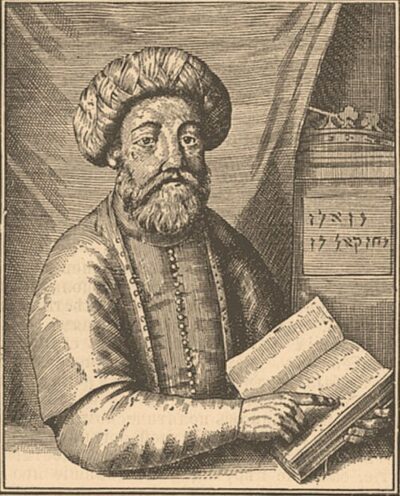
Sabbatai Zevi
Sabbatai Zevi was a mystic, rabbis. Born July 23, 1626, in İzmir. Died September 17, 1676, in Ulcinj.
Facts
13 facts · 1 confirmed by two sources · 3 cited · 8 from one source · 1 where the sources disagree
What’s different
- Born: we show July 23, 1626 (Sources disagree). Wikipedia says August 1, 1626
Where this comes from
Papalocal keeps its own record. It started from these sources; what each one said is kept here as it was copied, so a change on their side never changes this page by itself. Tap one to read its version.
What Wikidata says · copied November 16, 2026 · revision 2568763964
- Described as
- mystic, rabbis
- Other names
- Levi Sabathai, Shabbethai Ẓebi, Sabbataj Zĕwi, Shabthai Tsebi, Sabatai Sevi, Shabbetai Tzevi, Shabbatai Zevi, Shabbethai Zebi, Shabbetai Ẓevi, Shabbatai, Shabtai Tsevi, Sabbatai Zebi
- Born
- July 23, 1626
- Died
- September 17, 1676 · 2 references
- Born in
- İzmir · 1 reference
- Died in
- Ulcinj
- Citizen of
- Ottoman Empire
- Occupation
- mystic; rabbi; false messiah
- Field
- philosophy; Judaism · 1 reference; Jewish mysticism · 1 reference
- Religion
- Islam (1666–); Judaism
- Wikipedias with a page
- 47
Wikidata item Q299215 (wikidata.org/wiki/Q299215), public domain (CC0). Copied November 16, 2026.
What Wikipedia says · copied November 16, 2026 · revision 1383674318
Sabbatai Zevi (Hebrew: שַׁבְּתַי צְבִי, romanized: Šabbəṯay Ṣəḇī, August 1, 1626 – c. September 17, 1676), or Shabtai Tzvi, was a former Jewish mystic and rabbi from Smyrna who converted to Islam. His family were Romaniote Jews from Patras.
Active throughout the Ottoman Empire, Zevi claimed to be the long-awaited Jewish Messiah and founded the Sabbatean movement, which gained significant traction among Jews. Central to his teachings was the belief that during the Messianic Age, acts traditionally considered sinful would transform into righteous ones. This antinomian doctrine led Zevi and his followers to deliberately violate Jewish commandments, a controversial practice that later inspired movements like the Frankists.
Upon arriving in Constantinople in February 1666, Sabbatai was imprisoned on the order of the grand vizier Köprülüzade Fazıl Ahmed Pasha. In September, after being moved from different prisons around the capital to the imperial courts' seat in Adrianople (now Edirne), he was convicted of fomenting sedition. Sabbatai was given the choice of death or conversion to Islam by the Grand Vizier representing Sultan Mehmed IV. He chose conversion, donning an Islamic turban from then on. The heads of the Ottoman state rewarded him with a generous pension for complying with their political and religious plans. About 300 families who followed Zevi also converted to Islam and became known as the Dönme, Turkish for "converts".
Subsequently, the Ottomans banished him twice, first within Constantinople, and, after he was heard singing Psalms with Jews there, to a small town known today as Ulcinj in what is now Montenegro. He died in isolation.
- Born, in its opening lines
- August 1, 1626
- Died, in its opening lines
- September 17, 1676
From the Wikipedia article “Sabbatai Zevi” (en.wikipedia.org/wiki/Sabbatai_Zevi), by its contributors, under CC BY-SA 4.0 (creativecommons.org/licenses/by-sa/4.0/). Copied November 16, 2026; not changed.
Confirmed Two sources agree. Cited One source, and it names where it got it. One source One source, without a reference of its own. Sources disagree The sources disagree. We show the best-supported value and keep theirs below.
