
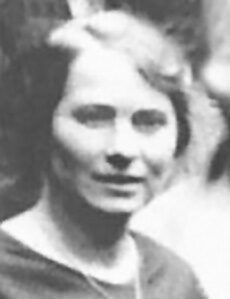
Sabina Spielrein
Sabina Spielrein was a Russian physician and one of the first female psychoanalysts. Born November 7, 1885, in Rostov-on-Don. Died August 11, 1942, in Zmievskaya Balka. Educated at University of Zurich.
Facts
16 facts · 2 confirmed by two sources · 6 cited · 8 from one source
What’s different
- Born: we show November 7, 1885 (Confirmed). Wikidata also lists October 25, 1885
- Died: we show August 11, 1942 (Confirmed). Wikidata also lists August 12, 1942
Where this comes from
Papalocal keeps its own record. It started from these sources; what each one said is kept here as it was copied, so a change on their side never changes this page by itself. Tap one to read its version.
What Wikidata says · copied November 16, 2026 · revision 2563998480
- Described as
- Russian physician and one of the first female psychoanalysts (1885–1942)
- Other names
- Sabina Naftulovna Spielrein, Sabina Nikolayevna Shpilreyn-Sheftel, Sabina Nikolayevna Spielrein, Sabina Spielrain
- Born
- November 7, 1885 · 2 references; October 25, 1885 · 1 reference
- Died
- August 11, 1942 · 1 reference; August 12, 1942 · 3 references
- Born in
- Rostov-on-Don · 1 reference
- Died in
- Zmievskaya Balka · 2 references
- Citizen of
- Russian Empire · 2 references; Soviet Union · 3 references
- Occupation
- psychiatrist; psychoanalyst · 1 reference; essayist; physician · 1 reference
- Worked for
- Psychiatrische Universitätsklinik Zürich
- Education
- University of Zurich · 1 reference
- Field
- psychoanalysis
- Mother
- Eva Spielrein
- Siblings
- Isaak Shpilreyn; Yan Shpil'rein
- Wikipedias with a page
- 38
Wikidata item Q232336 (wikidata.org/wiki/Q232336), public domain (CC0). Copied November 16, 2026.
What Wikipedia says · copied November 16, 2026 · revision 1384529725
Sabina Nikolayevna Spielrein (Russian: Сабина Николаевна Шпильрейн, IPA: [sɐˈbʲinə nʲɪkɐˈlajɪvnə ʂpʲɪlʲˈrɛjn]; 7 November [O.S. 26 October] 1885 – 11 August 1942) was a Russian physician and one of the first female psychoanalysts.
She was first the patient of Carl Gustav Jung, then the student of Jung, then eventually his colleague. She also had an intimate relationship with Jung during 1908–1910, as is documented in their correspondence from the time and her diaries. Spielrein also met, corresponded with, and had a collegial relationship with Sigmund Freud. Spielrein also worked with and psychoanalysed Swiss developmental psychologist Jean Piaget.
Spielrein worked as a psychiatrist, psychoanalyst, teacher and paediatrician in Switzerland and Russia. In her thirty-year professional career, she published over 35 papers in three languages (German, French and Russian), covering psychoanalysis, developmental psychology, psycholinguistics and educational psychology. Among her works in the field of psychoanalysis is the essay titled "Die Destruktion als Ursache des Werdens"written in German in 1912, published in English as "Destruction as the Cause of Coming Into Being". Spielrein was a pioneer of psychoanalysis and one of the first to introduce the concept of the Todestrieb (in Freudian analysis called the death drive; sometimes referred to as the "death instinct" in layman's terms).
Spielrein was one of the first psychoanalysts to conduct a case study on early concepts of schizophrenia, and to have a dissertation appear in a psychoanalytic journal.
Spielrein is increasingly recognized as an important and innovative thinker who was marginalized in history because of her unusual eclecticism, refusal to join factions, and feminist approach to psychology.
Sabina Spielrein was killed during the Holocaust on August 11, 1942, by a Nazi SS death squad, during a mass execution of Jews at the Zmievskaya Balka ravine in Rostov-on-Don, Soviet Union.
- Born, in its opening lines
- November 7, 1885
- Died, in its opening lines
- August 11, 1942
From the Wikipedia article “Sabina Spielrein” (en.wikipedia.org/wiki/Sabina_Spielrein), by its contributors, under CC BY-SA 4.0 (creativecommons.org/licenses/by-sa/4.0/). Copied November 16, 2026; not changed.
Confirmed Two sources agree. Cited One source, and it names where it got it. One source One source, without a reference of its own. Sources disagree The sources disagree. We show the best-supported value and keep theirs below.
