
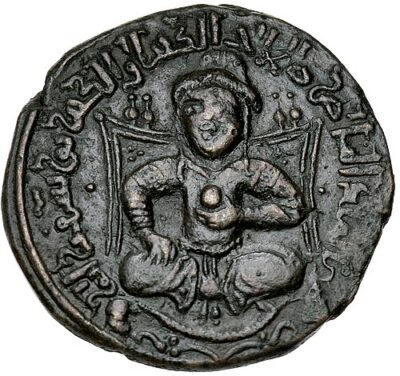
Saladin
Saladin was a Sultan of Egypt and founder of the Ayyubid dynasty. Born 1138, in Tikrit Castle. Died March 4, 1193, in Damascus. Positions held include Vizier of the Fatimid Caliphate (1169–1174), Sultan of Egypt (1169–1193) and Sultan of Damascus (1174–1193).
Facts
33 facts · 1 confirmed by two sources · 8 cited · 23 from one source · 1 where the sources disagree
What’s different
- Born: we show 1138 (Sources disagree). Wikipedia says c. 1137
Where this comes from
Papalocal keeps its own record. It started from these sources; what each one said is kept here as it was copied, so a change on their side never changes this page by itself. Tap one to read its version.
What Wikidata says · copied November 16, 2026 · revision 2570031677
- Described as
- Sultan of Egypt and founder of the Ayyubid dynasty (1137–1193)
- Other names
- Saladin Ayyūbid, Yusuf ibn Ayyub, Ṣalāḥ ad-Dīn Yūsuf ibn Ayyūb alarabi, Salah ad-Din
- Born
- 1138 · 1 reference
- Died
- March 4, 1193 · 2 references
- Born in
- Tikrit Castle · 3 references
- Died in
- Damascus · 2 references
- Buried in
- Aziziyeh Madrasa
- Cause of death
- infectious disease
- Name at birth
- يُوسُف بن نجم الدين أيُّوب
- Occupation
- military personnel; governor; Amir · 1 reference; sultan · 1 reference; king · 1 reference; military leader · 1 reference
- Positions held
- Vizier of the Fatimid Caliphate (1169–1174) · 1 reference; Sultan of Egypt (1169–1193); Sultan of Damascus (1174–1193); emir of Aleppo (1183–1193); emir of Kerak (1188); Amir (1185–1193)
- Spouse
- Ismat ad-Din Khatun
- Children
- Al-Afdal ibn Salah ad-Din; Al-Aziz Uthman; Az-Zahir Ghazi
- Father
- Najm ad-Din Ayyub
- Mother
- Sitt al-Mulk Fatma Khatun
- Siblings
- Turan-Shah; Al-Adil I; Rabia Khatoon; Tughtakin ibn Ayyub; Sitt al-Sham; Nur Ad-Din Shahanshah
- Religion
- Islam · 1 reference; Sunni Islam
- Wikipedias with a page
- 157
Wikidata item Q8581 (wikidata.org/wiki/Q8581), public domain (CC0). Copied November 16, 2026.
What Wikipedia says · copied November 16, 2026 · revision 1379008567
Salah ad-Din Yusuf ibn Ayyub (c. 1137 – 4 March 1193), commonly known as Saladin, was the founder of the Ayyubid dynasty and the first sultan of both Egypt and Syria. A Sunni Muslim ruler of Kurdish origin, Saladin was an important figure of the Third Crusade and spearheaded the Muslim military effort against the Crusader states in the Levant. At the height of his power, the Ayyubid realm spanned Egypt, Syria, Upper Mesopotamia, the Hejaz, Yemen, and Nubia.
Saladin was sent to Fatimid Egypt in 1164, alongside his uncle Shirkuh, a Kurdish mercenary commander in service of the Zengid dynasty, on the orders of Nur al-Din Zengi. With their original purpose being to help restore Shawar as the vizier to the teenage Fatimid caliph al-Adid, a power struggle ensued between Shirkuh and Shawar after the latter was reinstated. Saladin, meanwhile, climbed the ranks of the Fatimid government by virtue of his military successes against Crusader assaults and his personal closeness to al-Adid. After Shawar was assassinated and Shirkuh died in 1169, al-Adid appointed Saladin as vizier. During his tenure, Saladin, a Sunni Muslim, began to undermine the Fatimid establishment; following al-Adid's death in 1171, he abolished the Cairo-based Fatimid Caliphate which was an Isma'ili (a branch within Shi'a Islam) dynasty, and realigned Egypt with the Baghdad-based Sunni Abbasid Caliphate.
In the following years, Saladin led forays against the Crusader states in Palestine, commissioned the successful conquest of Yemen, and staved off pro-Fatimid rebellions in Egypt. Not long after Nur ad-Din died in 1174, Saladin launched his conquest of Syria, peacefully entering Damascus at the request of its governor. By mid-1175, Saladin had conquered Hama and Homs, inviting the animosity of other Zengid lords, who were the official rulers of Syria's principalities; he subsequently defeated the Zengids at the Battle of the Horns of Hama in 1175 and was thereafter proclaimed the Sultan of Egypt and Syria by the Abbasid caliph al-Mustadi. Saladin launched further conquests in northern Syria and Upper Mesopotamia, escaping two attempts on his life by the Order of Assassins before returning to Egypt in 1177 to address local issues there. By 1182, Saladin had completed the conquest of Syria after capturing Aleppo but failed to take over the Zengid stronghold of Mosul.
Under Saladin's command, the Ayyubid army defeated the Crusaders at the decisive Battle of Hattin in 1187, capturing Jerusalem and re-establishing Muslim military dominance in the Levant. Although the Crusaders' Kingdom of Jerusalem persisted until the late 13th century, the defeat in 1187 marked a turning point in the Christian military effort against Muslim powers in the region. Saladin died in Damascus in 1193, having given away much of his personal wealth to his subjects; he is buried in a mausoleum adjacent to the Umayyad Mosque. Alongside his significance to Muslim culture, Saladin is revered prominently in Kurdish, Turkic, Arab and even Western culture. He has frequently been described as the most famous Kurdish figure in history.
- Born, in its opening lines
- c. 1137
- Died, in its opening lines
- March 4, 1193
From the Wikipedia article “Saladin” (en.wikipedia.org/wiki/Saladin), by its contributors, under CC BY-SA 4.0 (creativecommons.org/licenses/by-sa/4.0/). Copied November 16, 2026; not changed.
Confirmed Two sources agree. Cited One source, and it names where it got it. One source One source, without a reference of its own. Sources disagree The sources disagree. We show the best-supported value and keep theirs below.
