
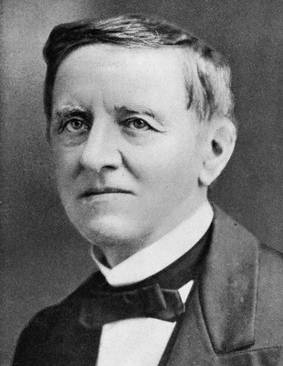
Samuel J. Tilden
Samuel J. Tilden was an American politician, Governor of New York from 1875 to 1876, and 1876 Democratic nominee for President. Born February 9, 1814, in New Lebanon. Died August 4, 1886, in Yonkers. Positions held include Governor of New York (1875–1876) and member of the New York State Assembly. Educated at Yale University and New York University School of Law.
Facts
16 facts · 2 confirmed by two sources · 3 cited · 11 from one source
What’s different
- Born: we show February 9, 1814 (Confirmed). Wikidata also lists February 4, 1814
Where this comes from
Papalocal keeps its own record. It started from these sources; what each one said is kept here as it was copied, so a change on their side never changes this page by itself. Tap one to read its version.
What Wikidata says · copied November 15, 2026 · revision 2567239531
- Described as
- American politician, Governor of New York from 1875 to 1876, and 1876 Democratic nominee for President (1814-1886)
- Other names
- Samuel Jones Tilden, Samuel Tilden, Governor Tilden, Governor Samuel Tilden
- Born
- February 9, 1814 · 4 references; February 4, 1814 · 2 references
- Died
- August 4, 1886 · 4 references
- Born in
- New Lebanon
- Died in
- Yonkers
- Buried in
- Gov. Samuel J. Tilden Monument
- Name at birth
- Samuel Jones Tilden
- Citizen of
- United States
- Occupation
- politician · 1 reference; lawyer · 1 reference
- Positions held
- Governor of New York (1875–1876); member of the New York State Assembly
- Political party
- Democratic Party
- Education
- Yale University; New York University School of Law
- Father
- Elam Tilden · 1 reference
- Religion
- Christianity
- Wikipedias with a page
- 29
Wikidata item Q281566 (wikidata.org/wiki/Q281566), public domain (CC0). Copied November 15, 2026.
What Wikipedia says · copied November 15, 2026 · revision 1385392117
Samuel Jones Tilden (February 9, 1814 – August 4, 1886) was an American politician who served as the 25th governor of New York and was the Democratic nominee in the disputed 1876 United States presidential election.
Tilden was born in 1814 into a wealthy family in New Lebanon, New York. Attracted to politics at a young age, he became a protégé of Martin Van Buren. After studying at Yale University and the New York University School of Law, Tilden began a legal career in New York City, becoming a noted corporate lawyer. He served in the New York State Assembly and helped launch Van Buren's candidacy in the 1848 United States presidential election. A War Democrat who opposed slavery, Tilden opposed Abraham Lincoln in the 1860 presidential election, but later supported him and the Union during the Civil War. Afterward, he became the chairman of the New York State Democratic Committee and managed Horatio Seymour's campaign in the 1868 presidential election.
Tilden initially cooperated with the state party's Tammany Hall faction, but he broke with them in 1871 due to boss William M. Tweed's rampant corruption. Tilden won election as governor of New York in 1874, and in that office, he helped break up the Canal Ring. His battle against public corruption, along with his personal fortune and electoral success in New York, made him the leading candidate for the Democratic nomination for president in 1876. Tilden was selected as the party's nominee on the second ballot. In the general election, Tilden faced Republican nominee Rutherford B. Hayes. Tilden focused his campaign on civil service reform, support for the gold standard, and opposition to high taxes, but many of his supporters were more concerned with ending Reconstruction in the Southern United States.
Tilden won the popular vote by 250,000 votes but 20 electoral votes were in dispute, leaving Tilden and Hayes without a majority of the electoral vote. As Tilden had won 184 electoral votes, one vote shy of a majority, a Hayes victory required that he sweep all of the disputed electoral votes. Against Tilden's wishes, Congress appointed the bipartisan Electoral Commission to settle the controversy. Republicans had a one-seat advantage on the Commission, and decided in a series of party-line rulings that Hayes had won all of the disputed electoral votes. In the Compromise of 1877, Democratic leaders agreed to accept Hayes as the victor in return for the end of Reconstruction. Tilden is the only presidential candidate to win an absolute majority of the popular vote while losing the election. He subsequently left politics and died in 1886.
- Born, in its opening lines
- February 9, 1814
- Died, in its opening lines
- August 4, 1886
From the Wikipedia article “Samuel J. Tilden” (en.wikipedia.org/wiki/Samuel_J._Tilden), by its contributors, under CC BY-SA 4.0 (creativecommons.org/licenses/by-sa/4.0/). Copied November 15, 2026; not changed.
Confirmed Two sources agree. Cited One source, and it names where it got it. One source One source, without a reference of its own. Sources disagree The sources disagree. We show the best-supported value and keep theirs below.
