
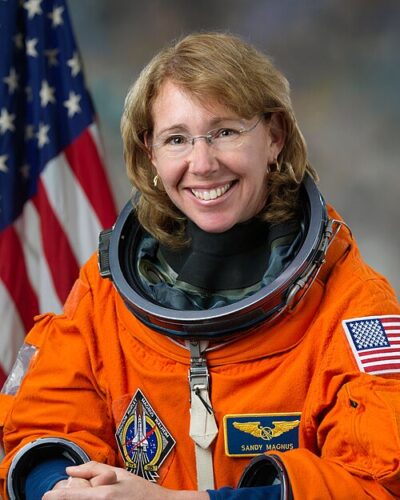
Sandra Magnus
Sandra Magnus is an American astronaut. Born October 30, 1964, in Belleville. Educated at Georgia Tech and Missouri University of Science and Technology. Awards include Medal "For Merit in Space Exploration" and NASA Distinguished Service Medal.
Facts
12 facts · 1 confirmed by two sources · 2 cited · 9 from one source
Where this comes from
Papalocal keeps its own record. It started from these sources; what each one said is kept here as it was copied, so a change on their side never changes this page by itself. Tap one to read its version.
What Wikidata says · copied November 14, 2026 · revision 2553968424
- Described as
- American astronaut
- Other names
- Sandra Hall Magnus
- Born
- October 30, 1964 · 1 reference
- Born in
- Belleville · 1 reference
- Citizen of
- United States
- Occupation
- astronaut; engineer
- Worked for
- National Aeronautics and Space Administration
- Education
- Georgia Tech; Missouri University of Science and Technology; Belleville High School-West; Southwestern Illinois College
- Awards
- Medal "For Merit in Space Exploration"; NASA Distinguished Service Medal (2009) · 1 reference
- Wikipedias with a page
- 40
Wikidata item Q49064 (wikidata.org/wiki/Q49064), public domain (CC0). Copied November 14, 2026.
What Wikipedia says · copied November 14, 2026 · revision 1381998306
Sandra Hall Magnus (born October 30, 1964) is an American engineer and a former NASA astronaut. She flew to space three times, as mission specialist on STS-112, as ISS crewmember during Expedition 18 and as mission specialist on STS-135. She was also a licensed amateur radio operator with the call sign KE5FYE though that callsign has since expired. From 2012 until 2018 Magnus was the executive director of the American Institute of Aeronautics and Astronautics.
- Born, in its opening lines
- October 30, 1964
From the Wikipedia article “Sandra Magnus” (en.wikipedia.org/wiki/Sandra_Magnus), by its contributors, under CC BY-SA 4.0 (creativecommons.org/licenses/by-sa/4.0/). Copied November 14, 2026; not changed.
Confirmed Two sources agree. Cited One source, and it names where it got it. One source One source, without a reference of its own. Sources disagree The sources disagree. We show the best-supported value and keep theirs below.
