
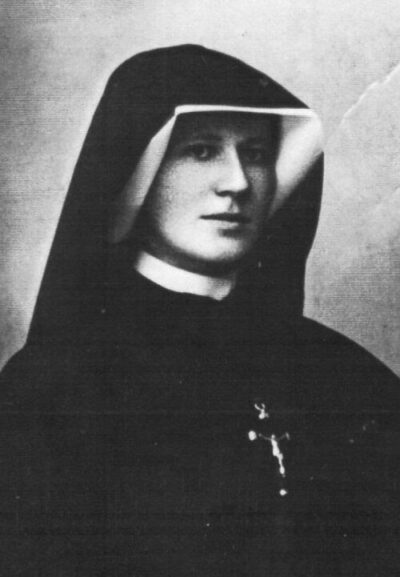
Santa Faustina Kowalska
Santa Faustina Kowalska was a nun and saint from Poland. Born August 25, 1905, in Głogowiec. Died October 5, 1938, in Kraków. Known for Diary: Divine Mercy in My Soul.
Facts
24 facts · 2 confirmed by two sources · 14 cited · 8 from one source
Where this comes from
Papalocal keeps its own record. It started from these sources; what each one said is kept here as it was copied, so a change on their side never changes this page by itself. Tap one to read its version.
What Wikidata says · copied November 16, 2026 · revision 2569161456
- Described as
- nun and saint from Poland (1905–1938)
- Other names
- Mary Faustina Kowalska, Saint Faustina, Maria Faustyna Kowalska, Faustyna Kowalska
- Born
- August 25, 1905 · 6 references
- Died
- October 5, 1938 · 6 references
- Born in
- Głogowiec · 1 reference
- Died in
- Kraków · 1 reference
- Buried in
- Chapel of St. Joseph in Kraków
- Name at birth
- Helena Kowalska · 1 reference
- Citizen of
- Russian Empire (–1918) · 1 reference; Second Polish Republic (1918–) · 1 reference
- Occupation
- religious sister; nun · 1 reference; mystic · 1 reference; writer; Christian nun · 1 reference
- Genre
- diary
- Known for
- Diary: Divine Mercy in My Soul
- Field
- gardening; fiction
- Religion
- Catholicism · 1 reference
- Lived in
- Głogowiec · 1 reference; Aleksandrów Łódzki · 1 reference; Łódź · 1 reference; Ostrówek · 1 reference; Warsaw · 1 reference
- Website
- http://www.faustyna.pl
- Wikipedias with a page
- 63
Wikidata item Q18978 (wikidata.org/wiki/Q18978), public domain (CC0). Copied November 16, 2026.
What Wikipedia says · copied November 16, 2026 · revision 1379957926
Maria Faustyna Kowalska of the Blessed Sacrament, OLM (born Helena Kowalska; 25 August 1905 – 5 October 1938) was a Polish Catholic religious sister and mystic. Faustyna, popularly spelled Faustina in English, had apparitions of Jesus Christ which inspired the Catholic devotion to the Divine Mercy, therefore she is sometimes called the "secretary" of Divine Mercy.
Throughout her life, Kowalska reported having visions of Jesus and conversations with him, which she noted in her diary, later published as The Diary of Saint Maria Faustina Kowalska: Divine Mercy in My Soul. Her biography, submitted to the Congregation for the Causes of Saints, quoted some of the conversations with Jesus regarding the Divine Mercy devotion.
At the age of 20 years, she joined a convent in Warsaw. She was later transferred to Płock and then to Vilnius, where she met Father Michał Sopoćko, who was to be her confessor and spiritual director, and who supported her devotion to the Divine Mercy. With this priest's help, Kowalska commissioned an artist to paint the first Divine Mercy image, based on her vision of Jesus. Father Sopoćko celebrated Mass in the presence of this painting on Low Sunday, also known as the Second Sunday of Easter or (as established by Pope John Paul II), Divine Mercy Sunday.
The Catholic Church canonized Kowalska as a saint on 30 April 2000. The mystic is classified in the liturgy as a virgin and is venerated within the church as the "Apostle of Divine Mercy". Her tomb is in the Divine Mercy Sanctuary, Kraków, where she spent the end of her life and met confessor Józef Andrasz, who also supported the message of mercy.
- Born, in its opening lines
- August 25, 1905
- Died, in its opening lines
- October 5, 1938
From the Wikipedia article “Faustina Kowalska” (en.wikipedia.org/wiki/Faustina_Kowalska), by its contributors, under CC BY-SA 4.0 (creativecommons.org/licenses/by-sa/4.0/). Copied November 16, 2026; not changed.
Confirmed Two sources agree. Cited One source, and it names where it got it. One source One source, without a reference of its own. Sources disagree The sources disagree. We show the best-supported value and keep theirs below.
