
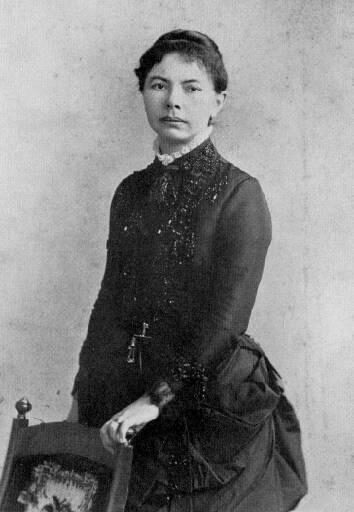
Sarah Frances Whiting
Sarah Frances Whiting was an American physicist and astronomer. Born August 23, 1847, in Wyoming. Died September 12, 1927, in Wilbraham. Educated at Massachusetts Institute of Technology.
Facts
12 facts · 2 confirmed by two sources · 5 cited · 5 from one source
Where this comes from
Papalocal keeps its own record. It started from these sources; what each one said is kept here as it was copied, so a change on their side never changes this page by itself. Tap one to read its version.
What Wikidata says · copied November 16, 2026 · revision 2540274826
- Described as
- American physicist and astronomer (1847-1927)
- Born
- August 23, 1847 · 2 references
- Died
- September 12, 1927 · 3 references
- Born in
- Wyoming · 1 reference
- Died in
- Wilbraham · 1 reference
- Buried in
- Machpelah Cemetery
- Citizen of
- United States · 1 reference
- Occupation
- physicist · 1 reference; astronomer · 1 reference
- Worked for
- Wellesley College
- Education
- Massachusetts Institute of Technology
- Field
- physics · 1 reference; astronomy · 1 reference
- Wikipedias with a page
- 22
Wikidata item Q3473350 (wikidata.org/wiki/Q3473350), public domain (CC0). Copied November 16, 2026.
What Wikipedia says · copied November 16, 2026 · revision 1371410235
Sarah Frances Whiting (August 23, 1847 – September 12, 1927) was an American physicist and astronomer. In February 1896 Whiting founded both the physics and astronomy departments; and was the first professor of physics and astronomy at Wellesley College, where she taught for over 30 years. At Wellesley College, Whiting instructed several notable astronomers and physicists, including Annie Jump Cannon. Whiting was one of the founders and the first director of the Whitin Observatory.
- Born, in its opening lines
- August 23, 1847
- Died, in its opening lines
- September 12, 1927
From the Wikipedia article “Sarah Frances Whiting” (en.wikipedia.org/wiki/Sarah_Frances_Whiting), by its contributors, under CC BY-SA 4.0 (creativecommons.org/licenses/by-sa/4.0/). Copied November 16, 2026; not changed.
Confirmed Two sources agree. Cited One source, and it names where it got it. One source One source, without a reference of its own. Sources disagree The sources disagree. We show the best-supported value and keep theirs below.
