
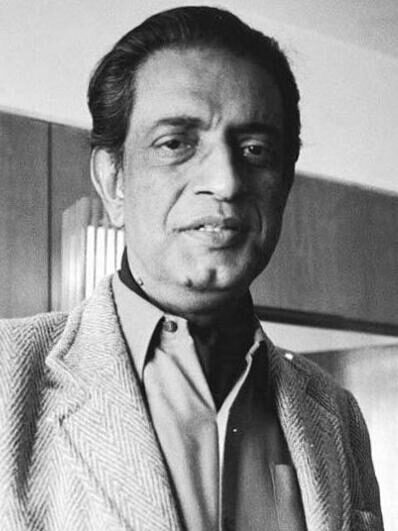
Satyajit Ray
Satyajit Ray was an Indian filmmaker and writer. Born May 2, 1921, in Kolkata. Died April 23, 1992, in Kolkata. Known for Pather Panchali, Mahanagar and Two. Educated at University of Calcutta and Visva-Bharati University. Awards include Sangeet Natak Akademi Award, Commander of the Legion of Honour and Ramon Magsaysay Award.
Facts
48 facts · 2 confirmed by two sources · 19 cited · 27 from one source
Where this comes from
Papalocal keeps its own record. It started from these sources; what each one said is kept here as it was copied, so a change on their side never changes this page by itself. Tap one to read its version.
What Wikidata says · copied November 16, 2026 · revision 2568976229
- Described as
- Indian filmmaker and writer (1921–1992)
- Other names
- Manik Da
- Born
- May 2, 1921 · 6 references
- Died
- April 23, 1992 · 5 references
- Born in
- Kolkata · 1 reference
- Died in
- Kolkata · 1 reference
- Cause of death
- cardiovascular disease
- Citizen of
- India (1950)
- Occupation
- film director · 4 references; writer · 1 reference; composer; film producer · 3 references; screenwriter · 4 references; film editor; lyricist · 1 reference; journalist
- Education
- University of Calcutta · 1 reference; Visva-Bharati University · 2 references; Ballygunge Government High School · 2 references; Presidency University (–1939)
- Known for
- Pather Panchali; Mahanagar; Two; Aparajito; Apur Sansar; Parash Pathar; Charulata; Nayak
- Awards
- Sangeet Natak Akademi Award (1959) · 1 reference; Commander of the Legion of Honour (1987) · 2 references; Ramon Magsaysay Award (1967) · 2 references; National Film Award for Best Bengali Feature Film (9 times) (1955, 1960, 1961, 1966, 1973, 1974, 1980, 1984, 1989) · 1 reference; National Film Award for Best Feature Film (6 times) (1955, 1959, 1964, 1968, 1971, 1991); Golden Lion (2 times) (1957, 1982); National Film Award for Second Best Feature Film (3 times) (1958, 1962, 1970); National Board of Review Award for Best Foreign Language Film (2 times) (1958, 1960); BAFTA Award for Best Film (2 times) (1958, 1959); Sutherland Trophy (1959); National Film Award for Best Non-Feature Film (2 times) (1961, 1972); Silver Bear for Best Director (2 times) (1964, 1965) · 1 reference; Padma Bhushan in Art (1965) · 2 references; National Film Award for Best Screenplay (4 times) (1966, 1970, 1974, 1993); Bodil Award for Best American Film (2 times) (1967, 1969)
- Spouse
- Bijoya Ray (1949–1992) · 2 references
- Children
- Sandip Ray · 1 reference
- Father
- Sukumar Ray · 1 reference
- Mother
- Suprabha Ray
- Religion
- Hinduism
- Lived in
- Kolkata
- Website
- http://www.satyajitray.org/
- Wikipedias with a page
- 144
Wikidata item Q8873 (wikidata.org/wiki/Q8873), public domain (CC0). Copied November 16, 2026.
What Wikipedia says · copied November 16, 2026 · revision 1385197000
Satyajit Ray (Bengali: [ʃot̪ːod͡ʒit̪ rae̯] ; 2 May 1921 – 23 April 1992) was an Indian film director, screenwriter, author, lyricist, magazine editor, illustrator, calligrapher, and composer. He is widely considered to be one of the greatest and most influential film directors in the history of cinema. He is celebrated for works including The Apu Trilogy (1955–1959), The Music Room (1958), The Big City (1963), Charulata (1964), and the Goopy–Bagha trilogy (1969–1992).
Ray was born in Calcutta to author Sukumar Ray and Suprabha Ray. Starting his career as a commercial artist, Ray was drawn into independent film-making after meeting French filmmaker Jean Renoir (who was in India to make his film The River) and viewing Vittorio De Sica's Italian neorealist film Bicycle Thieves (1948) during a visit to London. He started work on his first film after he returned from London.
Ray directed 36 films, including feature films, documentaries, and shorts. Ray's first film, Pather Panchali (1955), won eleven international prizes, including the inaugural Best Human Document award at the 1956 Cannes Film Festival. This film, along with Aparajito (1956) and Apur Sansar (The World of Apu) (1959), form The Apu Trilogy. Ray did the scripting, casting, scoring, and editing for the movie and designed his own credit titles and publicity material. He also authored several short stories and novels, primarily for young children and teenagers. Popular characters created by Ray include Feluda the sleuth, Professor Shonku the scientist, Tarini Khuro the storyteller, and Lalmohan Ganguly the novelist.
Ray received many major awards in his career, including a record thirty-seven Indian National Film Awards which includes Dadasaheb Phalke Award, a Golden Lion, a Golden Bear, two Silver Bears, many additional awards at international film festivals and ceremonies; till date remaining the only Indian to receive two out of Big Three film festivals top prizes. He received an Academy Honorary Award in 1992. In 1978, he was awarded an honorary degree by Oxford University. The Government of India honoured him with the Bharat Ratna, its highest civilian award, in 1992. On the occasion of the birth centenary of Ray, the International Film Festival of India, in recognition of the auteur's legacy, rechristened in 2021 its annual Lifetime Achievement Award to the "Satyajit Ray Lifetime Achievement Award". In 2024, Forbes ranked Ray as the 8th greatest film director (worldwide) of all time in its list of "The 30 Greatest Film Directors of All Time."
- Born, in its opening lines
- May 2, 1921
- Died, in its opening lines
- April 23, 1992
From the Wikipedia article “Satyajit Ray” (en.wikipedia.org/wiki/Satyajit_Ray), by its contributors, under CC BY-SA 4.0 (creativecommons.org/licenses/by-sa/4.0/). Copied November 16, 2026; not changed.
Confirmed Two sources agree. Cited One source, and it names where it got it. One source One source, without a reference of its own. Sources disagree The sources disagree. We show the best-supported value and keep theirs below.
