
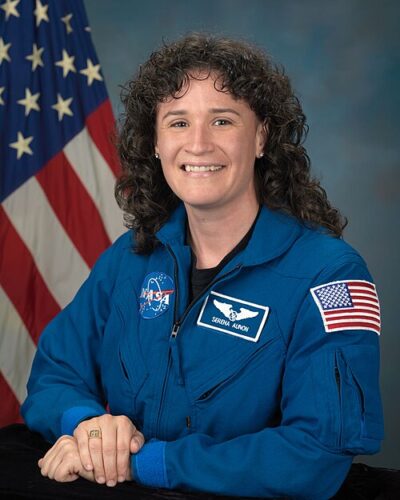
Serena M. Auñón-Chancellor
Serena M. Auñón-Chancellor is an American physician, engineer, and NASA astronaut. Born April 9, 1976, in Indianapolis. Educated at George Washington University and University of Texas Medical Branch (2 times).
Facts
11 facts · 1 confirmed by two sources · 5 cited · 5 from one source
Where this comes from
Papalocal keeps its own record. It started from these sources; what each one said is kept here as it was copied, so a change on their side never changes this page by itself. Tap one to read its version.
What Wikidata says · copied November 15, 2026 · revision 2547569546
- Described as
- American physician, engineer, and NASA astronaut
- Other names
- Serena Maria Auñón-Chancellor
- Born
- April 9, 1976 · 1 reference
- Born in
- Indianapolis · 1 reference
- Citizen of
- United States
- Occupation
- astronaut · 1 reference; physician · 1 reference; hydronaut; surgeon · 1 reference
- Worked for
- National Aeronautics and Space Administration
- Education
- George Washington University (–1997) · 1 reference; University of Texas Medical Branch (2 times) (2001–2007) · 1 reference; Poudre High School
- Wikipedias with a page
- 33
Wikidata item Q3479150 (wikidata.org/wiki/Q3479150), public domain (CC0). Copied November 15, 2026.
What Wikipedia says · copied November 15, 2026 · revision 1385895488
Serena Maria Auñón-Chancellor (born April 9, 1976) is an American physician, engineer, and NASA astronaut. She visited the International Space Station (ISS) during Expedition 56/57. After returning, she transitioned to a management role within NASA, where she handles medical issues for ISS, Lunar, and Exploration-Class missions.
- Born, in its opening lines
- April 9, 1976
From the Wikipedia article “Serena Auñón-Chancellor” (en.wikipedia.org/wiki/Serena_Auñón-Chancellor), by its contributors, under CC BY-SA 4.0 (creativecommons.org/licenses/by-sa/4.0/). Copied November 15, 2026; not changed.
Confirmed Two sources agree. Cited One source, and it names where it got it. One source One source, without a reference of its own. Sources disagree The sources disagree. We show the best-supported value and keep theirs below.
