
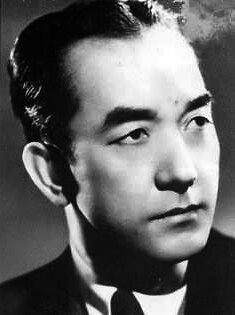
Sessue Hayakawa
Sessue Hayakawa was a Japanese actor. Born June 10, 1889, in Nanaura. Died November 23, 1973, in Tokyo. Teams include Chicago Maroons football. Educated at University of Chicago. Awards include star on Hollywood Walk of Fame, Medal with Purple Ribbon and Order of the Sacred Treasure, 4th class.
Facts
21 facts · 1 confirmed by two sources · 3 cited · 16 from one source · 1 where the sources disagree
What’s different
- Born: we show June 10, 1889 (Sources disagree). Wikipedia says June 10, 1886
Where this comes from
Papalocal keeps its own record. It started from these sources; what each one said is kept here as it was copied, so a change on their side never changes this page by itself. Tap one to read its version.
What Wikidata says · copied November 16, 2026 · revision 2559234171
- Described as
- Japanese actor (1889–1973)
- Born
- June 10, 1889 · 7 references
- Died
- November 23, 1973 · 6 references
- Born in
- Nanaura
- Died in
- Tokyo · 1 reference
- Cause of death
- thrombosis
- Name at birth
- 早川 金太郎
- Citizen of
- Japan; Empire of Japan (–1947)
- Occupation
- actor · 1 reference; novelist; screenwriter; film director; stage actor; film actor; director · 1 reference
- Education
- University of Chicago
- Teams
- Chicago Maroons football · 1 reference
- Awards
- star on Hollywood Walk of Fame · 1 reference; Medal with Purple Ribbon (1960); Order of the Sacred Treasure, 4th class (1966)
- Spouse
- Tsuru Aoki (1914–1961)
- Wikipedias with a page
- 39
Wikidata item Q382068 (wikidata.org/wiki/Q382068), public domain (CC0). Copied November 16, 2026.
What Wikipedia says · copied November 16, 2026 · revision 1379430526
Kintarō Hayakawa (June 10, 1886 – November 23, 1973), known professionally as Sessue Hayakawa, was a Japanese actor. He was a popular star and matinée idol in Hollywood during the silent film era of the 1910s and early 1920s. Hayakawa was the first actor of Asian descent to achieve stardom as a leading man in the United States and Europe. His "broodingly handsome" good looks and typecasting as a sexually dominant villain made him a heartthrob among American women during a time of racial discrimination, and he became one of the first male sex symbols of Hollywood.
After withdrawing from the Japanese naval academy and attempting suicide at 18, Hayakawa attended the University of Chicago, where he studied political economics in accordance with his wealthy parents' wish that he become a banker. Upon graduating, he traveled to Los Angeles to board a scheduled ship back to Japan, but tried acting in Little Tokyo. Hayakawa impressed Hollywood figures and was signed to star in The Typhoon (1914). He made his breakthrough in The Cheat (1915), and became famous for his roles as a forbidden lover. Hayakawa was one of the highest-paid stars of his time, earning $5,000 per week in 1915 and $2 million per year through his own production company from 1918 to 1921. Because of rising anti-Japanese sentiment and business difficulties, Hayakawa left Hollywood in 1922 and performed on Broadway and in Japan and Europe for many years before making his Hollywood comeback in Daughter of the Dragon (1931).
Of his talkies, Hayakawa is probably best known for his role as Colonel Saito in The Bridge on the River Kwai (1957), which earned him a nomination for the Academy Award for Best Supporting Actor, and the pirate captain in Swiss Family Robinson (1960). Hayakawa starred in over 80 feature films, and three of his films (The Cheat, The Dragon Painter, and The Bridge on the River Kwai) stand in the United States National Film Registry.
- Born, in its opening lines
- June 10, 1886
- Died, in its opening lines
- November 23, 1973
From the Wikipedia article “Sessue Hayakawa” (en.wikipedia.org/wiki/Sessue_Hayakawa), by its contributors, under CC BY-SA 4.0 (creativecommons.org/licenses/by-sa/4.0/). Copied November 16, 2026; not changed.
Confirmed Two sources agree. Cited One source, and it names where it got it. One source One source, without a reference of its own. Sources disagree The sources disagree. We show the best-supported value and keep theirs below.
