
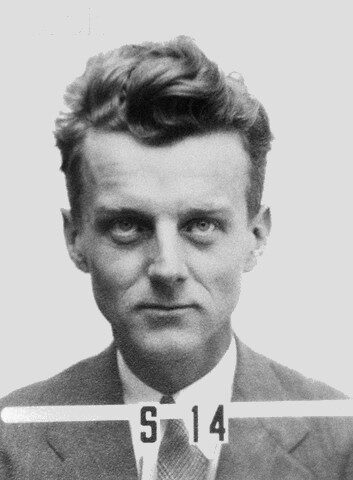
Seth Neddermeyer
Seth Neddermeyer was an American physicist. Born September 16, 1907, in Richmond. Died January 29, 1988, in Seattle. Educated at Stanford University and California Institute of Technology. Awards include Fellow of the American Physical Society and Enrico Fermi Award.
Facts
15 facts · 2 confirmed by two sources · 3 cited · 10 from one source
Where this comes from
Papalocal keeps its own record. It started from these sources; what each one said is kept here as it was copied, so a change on their side never changes this page by itself. Tap one to read its version.
What Wikidata says · copied November 16, 2026 · revision 2512673863
- Described as
- American physicist (1907–1988)
- Other names
- Seth Henry Neddermeyer, Seth H. Neddermeyer
- Born
- September 16, 1907 · 1 reference
- Died
- January 29, 1988 · 1 reference
- Born in
- Richmond
- Died in
- Seattle
- Cause of death
- Parkinson's disease
- Citizen of
- United States
- Occupation
- physicist · 1 reference; university teacher · 1 reference; nuclear physicist
- Worked for
- University of Washington
- Education
- Stanford University; California Institute of Technology; University of Olivet
- Awards
- Fellow of the American Physical Society; Enrico Fermi Award (1982) · 1 reference
- Wikipedias with a page
- 21
Wikidata item Q1356799 (wikidata.org/wiki/Q1356799), public domain (CC0). Copied November 16, 2026.
What Wikipedia says · copied November 16, 2026 · revision 1371995502
Seth Henry Neddermeyer (September 16, 1907 – January 29, 1988) was an American physicist who co-discovered the muon, and later championed the implosion-type nuclear weapon while working on the Manhattan Project at the Los Alamos Laboratory during World War II.
- Born, in its opening lines
- September 16, 1907
- Died, in its opening lines
- January 29, 1988
From the Wikipedia article “Seth Neddermeyer” (en.wikipedia.org/wiki/Seth_Neddermeyer), by its contributors, under CC BY-SA 4.0 (creativecommons.org/licenses/by-sa/4.0/). Copied November 16, 2026; not changed.
Confirmed Two sources agree. Cited One source, and it names where it got it. One source One source, without a reference of its own. Sources disagree The sources disagree. We show the best-supported value and keep theirs below.
