
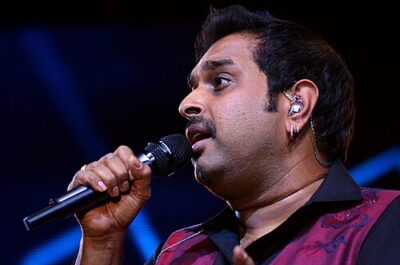
Shankar Mahadevan
Shankar Mahadevan is an Indian singer and composer. Born March 3, 1967, in Chembur. Educated at Our Lady of Perpetual Succour High School. Awards include Padma Shri in Art and National Film Award for Best Male Playback Singer.
Facts
20 facts · 1 confirmed by two sources · 7 cited · 12 from one source
Where this comes from
Papalocal keeps its own record. It started from these sources; what each one said is kept here as it was copied, so a change on their side never changes this page by itself. Tap one to read its version.
What Wikidata says · copied November 17, 2026 · revision 2563975344
- Described as
- Indian singer and composer
- Other names
- Sankar Mahadevan, Shankar Mahadevan Narayan
- Born
- March 3, 1967
- Born in
- Chembur · 1 reference
- Citizen of
- India
- Occupation
- actor; singer · 1 reference; composer · 1 reference; film actor · 1 reference; musician · 1 reference
- Education
- Our Lady of Perpetual Succour High School
- Member of
- Shankar–Ehsaan–Loy
- Genre
- Indian film music; Indian pop; Carnatic music; jazz · 1 reference
- Instrument
- voice · 1 reference
- Awards
- Padma Shri in Art (2019); National Film Award for Best Male Playback Singer
- Field
- film score
- Children
- Siddharth Mahadevan
- Website
- http://shankarmahadevan.com · 1 reference
- Wikipedias with a page
- 28
Wikidata item Q2049494 (wikidata.org/wiki/Q2049494), public domain (CC0). Copied November 17, 2026.
What Wikipedia says · copied November 17, 2026 · revision 1383337297
Shankar Mahadevan (born 3 March 1967) is an Indian singer and composer who is part of the Shankar–Ehsaan–Loy trio that makes music for Indian films. In 2023, he was awarded an honorary doctorate (honoris causa degree) by Birmingham City University.
- Born, in its opening lines
- March 3, 1967
From the Wikipedia article “Shankar Mahadevan” (en.wikipedia.org/wiki/Shankar_Mahadevan), by its contributors, under CC BY-SA 4.0 (creativecommons.org/licenses/by-sa/4.0/). Copied November 17, 2026; not changed.
Confirmed Two sources agree. Cited One source, and it names where it got it. One source One source, without a reference of its own. Sources disagree The sources disagree. We show the best-supported value and keep theirs below.
