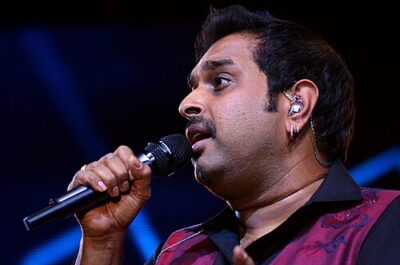
Shankar–Ehsaan–Loy
Shankar–Ehsaan–Loy is an Indian musical trio. It was founded in 1997. It won the National Film Award for Best Music Direction.
- Founded
- 1997
- Genre
- film score
- Country of origin
- India
All 8 facts, and where they come from
Facts
8 facts · 0 confirmed by two sources · 0 cited · 8 from one source
Where this comes from
Papalocal keeps its own record. It started from these sources; what each one said is kept here as it was copied, so a change on their side never changes this page by itself. Tap one to read its version.
What Wikidata says · copied November 17, 2026 · revision 2558024391
- Described as
- Indian musical trio
- Other names
- S-E-L, Shankar-Ehsaan-Loy, Shankar Ehsaan Loy
- What it is
- musical group; songwriting team
- Genre
- film score; world music
- Country of origin
- India
- Founded
- 1997
- Awards
- National Film Award for Best Music Direction
- Official website
- http://www.shankarehsaanloy.com
- Wikipedias with a page
- 21
Wikidata item Q2531621 (wikidata.org/wiki/Q2531621), public domain (CC0). Copied 2026-11-17.
What Wikipedia says · copied November 17, 2026 · revision 1377310667
Shankar–Ehsaan–Loy () is an Indian musical trio consisting of Shankar Mahadevan, Ehsaan Noorani, and Loy Mendonsa. They have composed music for over 50 soundtracks across five languages: Hindi, Tamil, Malayalam, Telugu, Marathi and English. Amongst the most critically acclaimed Indian musicians, the trio have won numerous awards, including National Film Awards, Filmfare Awards, and IIFA Awards.
They are often referred to as the Amar Akbar Anthony (AAA) of the Hindi film music industry. They are known for their compositions in Dil Chahta Hai (2001), Kal Ho Naa Ho (2003), Kabhi Alvida Naa Kehna (2006), My Name Is Khan (2010), Zindagi Na Milegi Dobara (2011) and Dil Dhadakne Do (2015).
From the Wikipedia article “Shankar–Ehsaan–Loy” (en.wikipedia.org/wiki/Shankar–Ehsaan–Loy), by its contributors, under CC BY-SA 4.0 (creativecommons.org/licenses/by-sa/4.0/). Copied 2026-11-17; not changed.
Confirmed Two sources agree. Cited One source, and it names where it got it. One source One source, without a reference of its own. Sources disagree The sources disagree. We show the best-supported value and keep theirs below.
Picture: Wikimedia Commons: Shankar Ehsaan Loy.jpg · See Commons file page