
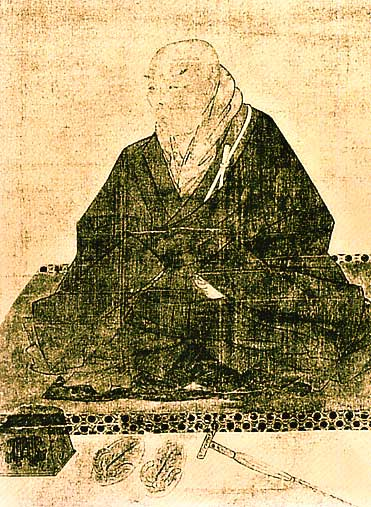
Shinran
Shinran was a Japanese Buddhist monk and founder of the Jōdo Shinshū sect. Born May 14, 1173, in Hino Tanjō-in Temple. Died January 9, 1263, in Kyoto. Known for Kyōgyōshinshō, Notes on the Meaning of the Pure Land Writings and Notes of a Baldheaded Fool.
Facts
22 facts · 0 confirmed by two sources · 0 cited · 18 from one source · 4 where the sources disagree
What’s different
- Born: we show May 14, 1173 (Sources disagree). Wikipedia says May 21, 1173
- Died: we show January 9, 1263 (Sources disagree). Wikipedia says January 16, 1263
- Buried in: we show Ōtani Byōdō (Sources disagree). Wikidata also lists Nishi Ōtani and Ōtani Sobyō
- Name at birth: we show 松若磨 (Sources disagree). Wikidata also lists 松若丸 and 十八公麿
Where this comes from
Papalocal keeps its own record. It started from these sources; what each one said is kept here as it was copied, so a change on their side never changes this page by itself. Tap one to read its version.
What Wikidata says · copied November 16, 2026 · revision 2565983489
- Described as
- Japanese Buddhist monk and founder of the Jōdo Shinshū sect (1173–1263)
- Other names
- Zenshin, Kenshin Daishi, Shinran Shonin, Fujii Yoshizane, Gutoku
- Born
- May 14, 1173
- Died
- January 9, 1263
- Born in
- Hino Tanjō-in Temple
- Died in
- Kyoto
- Buried in
- Ōtani Byōdō; Nishi Ōtani; Ōtani Sobyō
- Name at birth
- 松若磨; 松若丸; 十八公麿
- Citizen of
- Japan
- Occupation
- Buddhist monk; religious leader
- Known for
- Kyōgyōshinshō; Notes on the Meaning of the Pure Land Writings; Notes of a Baldheaded Fool; Nyūshutsu Nimonge; Sanjō Wasan; Lamp for the Latter Ages; Notes on the Essentials of Faith Alone; A Collection of Passages on the Types of Birth in the Three Pure Land Sutras; The Inscription on the Sacred Name and Images
- Spouse
- Eshin-ni
- Children
- Zenran; Kakushin-ni
- Religion
- Jōdo Shinshū
- Wikipedias with a page
- 28
Wikidata item Q512934 (wikidata.org/wiki/Q512934), public domain (CC0). Copied November 16, 2026.
What Wikipedia says · copied November 16, 2026 · revision 1381502428
Shinran (親鸞; Japanese pronunciation: [ɕiꜜn.ɾaɴ], May 21, 1173 – January 16, 1263) was a key Japanese Buddhist figure of the Kamakura Period who is regarded as the founder of the Jōdo Shinshū school of Japanese Buddhism. A pupil of Hōnen, the founder of the Japanese Pure Land movement, Shinran articulated a distinctive Pure Land vision that emphasized faith and absolute reliance on Amida Buddha's other-power.
While Shinran trained as a Tendai monk on Mount Hiei, he lived much of his life as a married Buddhist teacher unlike other Kamakura Buddhist reformers, and he described himself as "neither monk nor layman". Shinran's major work, the Kyōgyōshinshō (Teaching, Practice, Faith, and Realization), is a systematic exposition and defense of Pure Land doctrine. Shinran taught that liberation arises from the entrusting mind (shinjin) awakened through Amida's compassionate power, not from any merit or power of one's own. His interpretation profoundly reshaped the course of Japanese Buddhism and continues to influence East Asian religious thought.
- Born, in its opening lines
- May 21, 1173
- Died, in its opening lines
- January 16, 1263
From the Wikipedia article “Shinran” (en.wikipedia.org/wiki/Shinran), by its contributors, under CC BY-SA 4.0 (creativecommons.org/licenses/by-sa/4.0/). Copied November 16, 2026; not changed.
Confirmed Two sources agree. Cited One source, and it names where it got it. One source One source, without a reference of its own. Sources disagree The sources disagree. We show the best-supported value and keep theirs below.
