
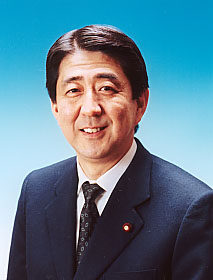
Shinzō Abe
Shinzō Abe was a Prime Minister of Japan from 2006–2007 and 2012–2020. Born September 21, 1954, in Shinjuku. Died July 8, 2022, in Nara Medical University Hospital. Positions held include Prime Minister of Japan (2 times) (2006–2020), Chief Cabinet Secretary (2005–2006) and member of the House of Representatives of Japan (2014–). Known for Solidarity Against the North Korean Threat and Towards a Beautiful Nation. Educated at Seikei University and USC Sol Price School of Public Policy. Awards include Grand Cross of the Order of Isabella the Catholic, Grand Cross of the Order of Honour and Grand Cross of the Ivorian Order of Merit.
Facts
48 facts · 2 confirmed by two sources · 11 cited · 34 from one source · 1 where the sources disagree
What’s different
- Cause of death: we show exsanguination (Sources disagree). Wikidata also lists gunshot wound
Where this comes from
Papalocal keeps its own record. It started from these sources; what each one said is kept here as it was copied, so a change on their side never changes this page by itself. Tap one to read its version.
What Wikidata says · copied November 16, 2026 · revision 2562946569
- Described as
- Prime Minister of Japan from 2006–2007 and 2012–2020 (1954–2022)
- Other names
- Shinzo Abe, Shinzou Abe, Abe Shinzou, Abe Shinzō, Abe Shinzo
- Born
- September 21, 1954 · 7 references
- Died
- July 8, 2022 · 6 references
- Born in
- Shinjuku
- Died in
- Nara Medical University Hospital · 4 references
- Buried in
- Kirigaya Funeral Hall (2022) · 1 reference
- Cause of death
- gunshot wound · 1 reference; exsanguination · 3 references
- Citizen of
- Japan
- Occupation
- politician · 2 references
- Positions held
- Prime Minister of Japan (2 times) (2006–2020) · 2 references; Chief Cabinet Secretary (2005–2006); member of the House of Representatives of Japan (2014–); President of the Liberal Democratic Party (2 times) (2006–2020)
- Political party
- Liberal Democratic Party (1993–) · 2 references
- Worked for
- Kobe Steel; Kakogawa Steel Works
- Education
- Seikei University; USC Sol Price School of Public Policy; Seikei Elementary School; Seikei Junior & Senior High School
- Member of
- Nippon Kaigi; Shinto Political Alliance Diet Members' Association (–2022) · 1 reference; Seiwa Seisaku Kenkyūkai
- Known for
- Solidarity Against the North Korean Threat; Towards a Beautiful Nation
- Awards
- Grand Cross of the Order of Isabella the Catholic (2017) · 3 references; Grand Cross of the Order of Honour; Grand Cross of the Ivorian Order of Merit; Grand Cross of the Order of Orange-Nassau; Knight Grand Officer of the Order of Merit; Order of Al-Khalifa (2013); Best Dressed Award Political and Economic Category (2 times) (2002, 2013); Time 100 (2 times) (2014, 2018) · 1 reference; honorary doctorate (2 times) (2013, 2022); honorary doctor of the Jawaharlal Nehru University (2015); Medal of the Oriental Republic of Uruguay (2018) · 2 references; Order of Sikatuna · 1 reference; Asian of the Year (2013); Herman Kahn Award (2013); honorary doctor of the Turkmen State University (2015)
- Field
- politics · 1 reference
- Spouse
- Akie Abe (1987–2022)
- Father
- Shintarō Abe · 2 references
- Mother
- Yōko Kishi
- Siblings
- Nobuo Kishi; Hironobu Abe
- Religion
- Shinto · 1 reference
- Height
- 1.75 m (5 ft 9 in)
- Website
- https://www.s-abe.or.jp/
- Wikipedias with a page
- 164
Wikidata item Q132345 (wikidata.org/wiki/Q132345), public domain (CC0). Copied November 16, 2026.
What Wikipedia says · copied November 16, 2026 · revision 1385574458
Shinzo Abe (21 September 1954 – 8 July 2022) was a Japanese statesman and politician who served as Prime Minister of Japan and President of the Liberal Democratic Party (LDP) from 2006 to 2007 and again from 2012 to 2020. He was the longest-serving prime minister in Japanese history, serving for nearly nine years in total.
Abe was born in Tokyo into the prominent Satō–Kishi–Abe family, the son of LDP politician Shintaro Abe and grandson of prime minister Nobusuke Kishi. He graduated from Seikei University and also attended the University of Southern California. After graduating from university, Abe worked in industry and party posts before being elected to the House of Representatives in 1993. Abe served as LDP Secretary-General from 2003 to 2004 and Chief Cabinet Secretary under Prime Minister Junichiro Koizumi from 2005 to 2006, when he replaced Koizumi as LDP President and Prime Minister. Abe became Japan's youngest post-war premier, and the first born after World War II. A staunch conservative and member of the ultranationalist organization Nippon Kaigi, which holds negationist views on Japanese history, Abe took right-wing stances including downplaying Japanese atrocities in textbooks, denying government coercion in the recruitment of comfort women during the war, and seeking revision of Article 9 of the Constitution. In 2007, he initiated the Quadrilateral Security Dialogue with the US, Australia, and India, aimed at resisting China's rise as a superpower. He resigned as premier that year due to his government's unpopularity and illness.
After recovering from his illness, Abe staged a political comeback in 2012, when he was again elected LDP President, leading the party to a landslide victory in that year's election. He became the first former Prime Minister to return to office since Shigeru Yoshida in 1948. In Abe's second term, he attempted to counter Japan's economic stagnation with "Abenomics", with mixed results. He was credited with reinstating the Trans-Pacific Partnership with a new agreement in 2018. In 2015, he passed the Legislation for Peace and Security which allowed deployment of the Japan Self-Defense Forces overseas under certain strict conditions, which was controversial and met with protests by Students Emergency Action for Liberal Democracy. Abe led the LDP to further victories in the 2014 and 2017 elections, becoming Japan's longest-serving Prime Minister. In 2020, he again resigned, citing a relapse of his illness, and was succeeded by Yoshihide Suga.
In 2022, Abe was assassinated in Nara while delivering a campaign speech for the upper house elections. The killer, Tetsuya Yamagami, confessed he was motivated by Abe's ties with the Unification Church. This was the first assassination of a former Japanese Prime Minister since 1936. A polarizing figure in Japan, Abe was praised by his supporters for strengthening Japan's security and international stature, while opponents criticized him for nationalistic policies and historical negationism, which they viewed as threatening Japanese pacifism and damaging relations with China and South Korea.
- Born, in its opening lines
- September 21, 1954
- Died, in its opening lines
- July 8, 2022
From the Wikipedia article “Shinzo Abe” (en.wikipedia.org/wiki/Shinzo_Abe), by its contributors, under CC BY-SA 4.0 (creativecommons.org/licenses/by-sa/4.0/). Copied November 16, 2026; not changed.
Confirmed Two sources agree. Cited One source, and it names where it got it. One source One source, without a reference of its own. Sources disagree The sources disagree. We show the best-supported value and keep theirs below.
