
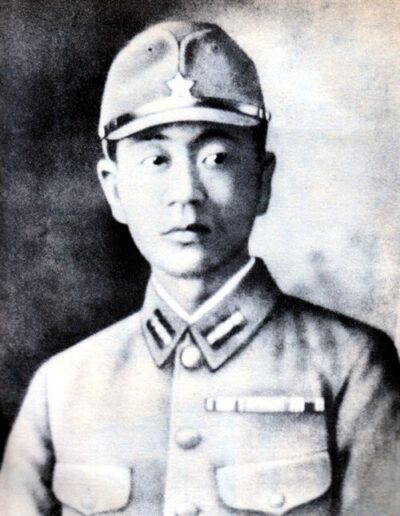
Shoichi Yokoi
Shoichi Yokoi was a Japanese World War II Soldier (1915−1997). Born March 31, 1915, in Saori. Died September 22, 1997, in Nagoya. Awards include Order of the Rising Sun.
Facts
13 facts · 2 confirmed by two sources · 2 cited · 9 from one source
Where this comes from
Papalocal keeps its own record. It started from these sources; what each one said is kept here as it was copied, so a change on their side never changes this page by itself. Tap one to read its version.
What Wikidata says · copied November 16, 2026 · revision 2561285244
- Described as
- Japanese World War II Soldier (1915−1997)
- Born
- March 31, 1915
- Died
- September 22, 1997 · 1 reference
- Born in
- Saori
- Died in
- Nagoya · 1 reference
- Cause of death
- myocardial infarction
- Citizen of
- Japan; Empire of Japan (–1947)
- Occupation
- military personnel; critic
- Awards
- Order of the Rising Sun · 1 reference
- Spouse
- Mihoko Yokoi · 1 reference
- Military branch
- Imperial Japanese Army (1941–)
- Military rank
- Sergeant · 1 reference
- Wikipedias with a page
- 33
Wikidata item Q379781 (wikidata.org/wiki/Q379781), public domain (CC0). Copied November 16, 2026.
What Wikipedia says · copied November 16, 2026 · revision 1383205124
Shōichi Yokoi (横井 庄一, Yokoi Shōichi; 31 March 1915 – 22 September 1997) was a Japanese soldier who served as a sergeant in the Imperial Japanese Army during World War II, becoming one of the last four Japanese holdouts to be found after the end of hostilities in 1945. He was discovered in the jungles of Guam on 24 January 1972, almost 28 years after U.S. forces had regained control of the island in 1944.
- Born, in its opening lines
- March 31, 1915
- Died, in its opening lines
- September 22, 1997
From the Wikipedia article “Shoichi Yokoi” (en.wikipedia.org/wiki/Shoichi_Yokoi), by its contributors, under CC BY-SA 4.0 (creativecommons.org/licenses/by-sa/4.0/). Copied November 16, 2026; not changed.
Confirmed Two sources agree. Cited One source, and it names where it got it. One source One source, without a reference of its own. Sources disagree The sources disagree. We show the best-supported value and keep theirs below.
