
Shuayb
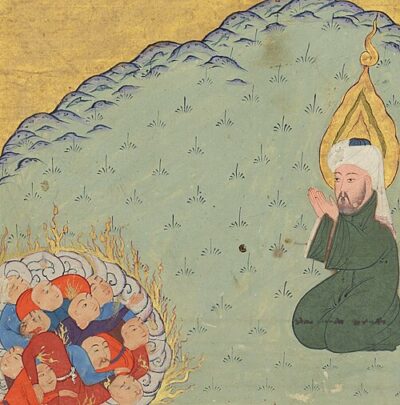
Shuayb was a Prophet narrated in the Quran. Positions held include prophet of Islam.
Facts
6 facts · 0 confirmed by two sources · 0 cited · 6 from one source
Where this comes from
Papalocal keeps its own record. It started from these sources; what each one said is kept here as it was copied, so a change on their side never changes this page by itself. Tap one to read its version.
What Wikidata says · copied November 16, 2026 · revision 2565279464
- Described as
- Prophet narrated in the Quran
- Other names
- Xuayb ibn Mahdan
- Born in
- Midian
- Died in
- Mahis
- Occupation
- preacher; herder; prophet of Islam
- Positions held
- prophet of Islam
- Wikipedias with a page
- 49
Wikidata item Q982867 (wikidata.org/wiki/Q982867), public domain (CC0). Copied November 16, 2026.
What Wikipedia says · copied November 16, 2026 · revision 1361111904
Shuaib, Shoaib, Shuayb or Shuʿayb (Arabic: شُعَيْب, IPA: [ʃuʕajb]; meaning: "who shows the right path") is an ancient Midianite prophet in Islam and the most revered prophet in the Druze faith. Shuaib is sometimes identified with the Hebrew biblical Jethro, Moses's father-in-law. Shuaib is mentioned in the Quran 11 times. He is believed to have lived after Ibrahim (Abraham), and Muslims believe that he was sent as a prophet to the Midianites, who are also known as the Aṣḥāb al-Aykah ("Companions of the Wood") for their worship of a large tree. To the Midianites, Shuaib proclaimed the "straight path", warning them to end their fraudulent ways. When the community did not repent, God destroyed the community.
Alongside Hud, Salih, and Muhammad, Shuaib is understood by Muslims as one of the four Arabian prophets sent by God. Ibn Kathir stated that he was known by Muslims as "the eloquent preacher amongst the prophets" because he was, according to tradition, granted talent and eloquence in his language.
The Druze honor Shuaib as their principal prophet and hold an annual pilgrimage to Nabi Shu’ayb—a site in the Lower Galilee believed by Druze to be his tomb—from April 25 to 28, known as Ziyara.
From the Wikipedia article “Shuaib” (en.wikipedia.org/wiki/Shuaib), by its contributors, under CC BY-SA 4.0 (creativecommons.org/licenses/by-sa/4.0/). Copied November 16, 2026; not changed.
Confirmed Two sources agree. Cited One source, and it names where it got it. One source One source, without a reference of its own. Sources disagree The sources disagree. We show the best-supported value and keep theirs below.
