
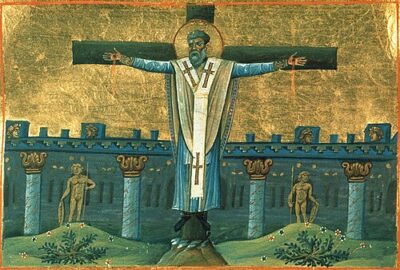
Simeon of Jerusalem
Simeon of Jerusalem was a human biblical figure in Acts 13:1, early bishop of Jerusalem. Born 1st century, in Galilee. Died 107, in Jerusalem. Positions held include Judeo-Christian Bishop of Jerusalem (62–107).
Facts
13 facts · 0 confirmed by two sources · 3 cited · 9 from one source · 1 where the sources disagree
What’s different
- Died: we show 107 (Sources disagree). Wikidata also lists 108
Where this comes from
Papalocal keeps its own record. It started from these sources; what each one said is kept here as it was copied, so a change on their side never changes this page by itself. Tap one to read its version.
What Wikidata says · copied November 16, 2026 · revision 2562791649
- Described as
- human biblical figure in Acts 13:1, early bishop of Jerusalem
- Born
- 1st century
- Died
- 107 · 1 reference; 108
- Born in
- Galilee
- Died in
- Jerusalem
- Occupation
- presbyter; Christian minister · 1 reference
- Positions held
- Judeo-Christian Bishop of Jerusalem (62–107)
- Member of
- seventy disciples · 1 reference
- Field
- martyrdom · 1 reference; church‘s ministry · 1 reference
- Father
- Cleopas
- Mother
- Mary of Clopas
- Religion
- Jewish Christian
- Wikipedias with a page
- 29
Wikidata item Q359829 (wikidata.org/wiki/Q359829), public domain (CC0). Copied November 16, 2026.
What Wikipedia says · copied November 16, 2026 · revision 1384661121
Simeon of Jerusalem, or Simon of Clopas (Hebrew: שמעון הקלפוס), was a Jewish Christian leader and according to most Christian traditions the second Bishop of Jerusalem (63 or 70–107), succeeding James, brother of Jesus. Simeon is sometimes identified with Simon, brother of Jesus, and has also been identified with the Apostle Simon the Zealot.
From the Wikipedia article “Simeon of Jerusalem” (en.wikipedia.org/wiki/Simeon_of_Jerusalem), by its contributors, under CC BY-SA 4.0 (creativecommons.org/licenses/by-sa/4.0/). Copied November 16, 2026; not changed.
Confirmed Two sources agree. Cited One source, and it names where it got it. One source One source, without a reference of its own. Sources disagree The sources disagree. We show the best-supported value and keep theirs below.
