
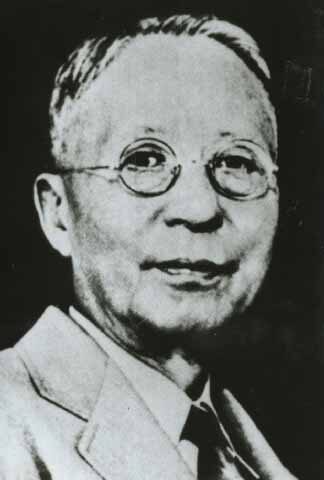
Soh Jaipil
Soh Jaipil was a Korean-American independence activist and journalist. Born January 7, 1864, in Boseong County. Died January 5, 1951, in Philadelphia. Educated at George Washington University and Perelman School of Medicine at the University of Pennsylvania.
Facts
24 facts · 2 confirmed by two sources · 4 cited · 17 from one source · 1 where the sources disagree
What’s different
- Born: we show January 7, 1864 (Confirmed). Wikidata also lists 1866
- Name at birth: we show 서재필 (Sources disagree). Wikidata also lists 徐載弼
Where this comes from
Papalocal keeps its own record. It started from these sources; what each one said is kept here as it was copied, so a change on their side never changes this page by itself. Tap one to read its version.
What Wikidata says · copied November 13, 2026 · revision 2564644950
- Described as
- Korean-American independence activist and journalist (1864–1951)
- Other names
- Philip Jaisohn, Phillip Jason, Seo Jai-pil, Songjae, Ssanggyong, Seo Jae-pil
- Born
- January 7, 1864 · 2 references; 1866 · 1 reference
- Died
- January 5, 1951 · 2 references
- Born in
- Boseong County
- Died in
- Philadelphia
- Cause of death
- cancer
- Name at birth
- 서재필; 徐載弼
- Citizen of
- United States (1890–); Korea
- Occupation
- journalist; politician · 1 reference; physician; political activist; philosopher; autobiographer
- Worked for
- University of Pennsylvania
- Education
- George Washington University; Perelman School of Medicine at the University of Pennsylvania; Keio University; George Washington University Medical School
- Field
- politics · 1 reference; opinion journalism · 1 reference
- Spouse
- Muriel Mary Armstrong · 1 reference
- Father
- Soh Kwang-hyo
- Religion
- Protestantism
- Wikipedias with a page
- 64
Wikidata item Q319934 (wikidata.org/wiki/Q319934), public domain (CC0). Copied November 13, 2026.
What Wikipedia says · copied November 13, 2026 · revision 1379624770
Seo Jae-pil (Korean: 서재필; Hanja: 徐載弼; January 7, 1864 – January 5, 1951), better known by his English name Philip Jaisohn, was a Korean American politician, physician, and Korean independence activist. He was the first Korean to become a naturalized citizen of the United States. He also founded the Tongnip sinmun, the first Korean newspaper written entirely in Hangul.
Jaisohn was one of the organizers of the failed Kapsin Coup in 1884. He was thus convicted for treason and sought refuge in the United States where he became a citizen and earned a medical doctorate. Upon returning to Korea in 1895, Jaisohn was offered a position as a chief advisor of the Joseon government. He declined, choosing to focus on reform movements where he advocated for democracy, Korean independence and self reliance from foreign intervention, numerous civil rights and universal suffrage. Jaisohn was forced to return to the United States in 1898, from where he participated in the First Korean Congress and advocated for the March First Movement and U.S. Government support for Korean independence. Jaisohn became a chief advisor to the United States Army Military Government in Korea after World War II and was elected as an interim representative in South Korea in the 1946 legislative election.
He died in 1951 shortly after returning to the United States during the Korean War. His remains were reinterred at the Seoul National Cemetery in 1994.
Jaisohn was an admirer of American-style liberalism and republicanism. He was also reform-minded, and sought to revise Confucianist culture and institutions in Korea.
- Born, in its opening lines
- January 7, 1864
- Died, in its opening lines
- January 5, 1951
From the Wikipedia article “Philip Jaisohn” (en.wikipedia.org/wiki/Philip_Jaisohn), by its contributors, under CC BY-SA 4.0 (creativecommons.org/licenses/by-sa/4.0/). Copied November 13, 2026; not changed.
Confirmed Two sources agree. Cited One source, and it names where it got it. One source One source, without a reference of its own. Sources disagree The sources disagree. We show the best-supported value and keep theirs below.
