
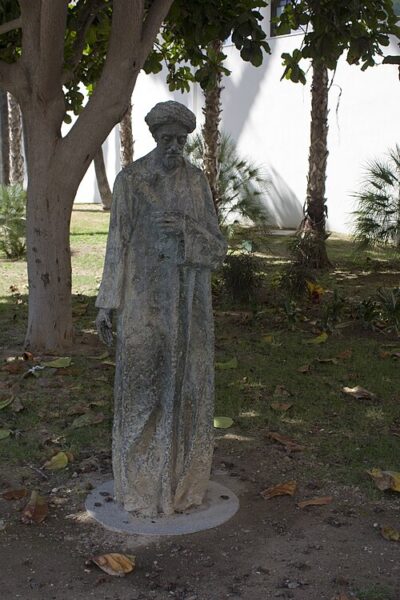
Solomon ibn Gabirol
Solomon ibn Gabirol was the 11th-century Andalusian poet and Jewish philosopher. Born 1021, in Málaga. Died 1058, in Valencia. Known for Azharot.
Facts
13 facts · 0 confirmed by two sources · 6 cited · 5 from one source · 2 where the sources disagree
What’s different
- Born: we show 1021 (Sources disagree). Wikidata also lists 1020
- Died: we show 1058 (Sources disagree). Wikidata also lists 1057 and 1070
Where this comes from
Papalocal keeps its own record. It started from these sources; what each one said is kept here as it was copied, so a change on their side never changes this page by itself. Tap one to read its version.
What Wikidata says · copied November 16, 2026 · revision 2565979661
- Described as
- 11th-century Andalusian poet and Jewish philosopher
- Other names
- Solomon ben Judah Ibn Gabirol, Avicebron, ʾIbn Gabiyrwl Šelomoh
- Born
- 1021 · 7 references; 1020 · 1 reference; 1021 · 1 reference
- Died
- 1058 · 2 references; 1057 · 1 reference; 1070 · 1 reference
- Born in
- Málaga · 2 references
- Died in
- Valencia · 1 reference
- Citizen of
- Caliphate of Córdoba
- Occupation
- poet · 1 reference; rabbi; philosopher · 2 references; writer · 3 references
- Known for
- Azharot
- Field
- philosophy; Neoplatonism · 1 reference
- Religion
- Judaism
- Wikipedias with a page
- 57
Wikidata item Q239355 (wikidata.org/wiki/Q239355), public domain (CC0). Copied November 16, 2026.
What Wikipedia says · copied November 16, 2026 · revision 1384430682
Solomon ibn Gabirol or Solomon ben Judah (Hebrew: ר׳ שְׁלֹמֹה בֶּן יְהוּדָה אִבְּן גָּבִּירוֹל, romanized: Šəlomo ben Yəhūdā ʾībən Gābīrōl, pronounced [ʃ(e)loˈmo ben jehuˈda ʔibn ɡabiˈʁol]; Arabic: أبو أيوب سليمان بن يحيى بن جبيرول, romanized: ’Abū ’Ayyūb Sulaymān bin Yaḥyá bin Jabīrūl, pronounced [ˈʔæbuː ʔæjˈjuːb sʊlæjˈmæːn bɪn ˈjæħjæː bɪn dʒæbiːˈruːl]) was an 11th-century Jewish poet and philosopher in the neoplatonic tradition in Al-Andalus. He published over a hundred poems, as well as works of Hebrew Biblical exegesis, philosophy, ethics, and satire. One source credits ibn Gabirol with creating a golem, possibly female, for household chores.
In the 19th century, scholars discovered that medieval translators had Latinized ibn Gabirol's name to Avicebron or Avencebrol; his work on Jewish neoplatonic philosophy had become highly regarded in Islamic and Christian philosophical circles but attributed to only his Latinized name during the intervening years. Ibn Gabirol is well known in the history of philosophy for the doctrine that all things, including souls and intellects, are composed of matter and form ("Universal Hylomorphism") and for his emphasis on divine will.
From the Wikipedia article “Solomon ibn Gabirol” (en.wikipedia.org/wiki/Solomon_ibn_Gabirol), by its contributors, under CC BY-SA 4.0 (creativecommons.org/licenses/by-sa/4.0/). Copied November 16, 2026; not changed.
Confirmed Two sources agree. Cited One source, and it names where it got it. One source One source, without a reference of its own. Sources disagree The sources disagree. We show the best-supported value and keep theirs below.
