
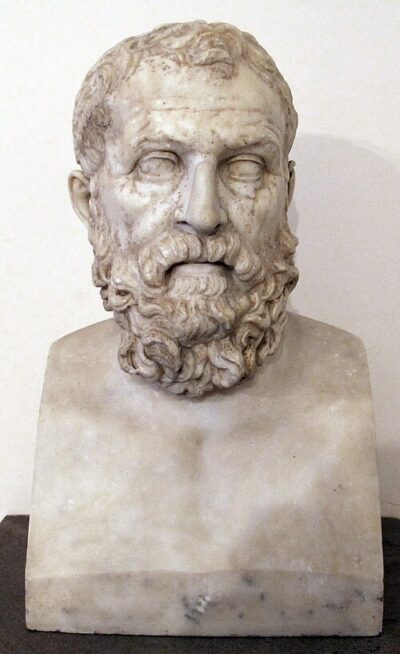
Solon
Solon was an Athenian legislator. Born 630 BC, in Classical Athens. Died 560 BC, in Cyprus. Positions held include eponymous archon (-594–-593).
Facts
11 facts · 0 confirmed by two sources · 6 cited · 5 from one source
Where this comes from
Papalocal keeps its own record. It started from these sources; what each one said is kept here as it was copied, so a change on their side never changes this page by itself. Tap one to read its version.
What Wikidata says · copied November 16, 2026 · revision 2567486178
- Described as
- Athenian legislator
- Other names
- Solon of Athens
- Born
- 630 BC · 2 references
- Died
- 560 BC · 2 references
- Born in
- Classical Athens
- Died in
- Cyprus · 1 reference
- Citizen of
- Classical Athens
- Occupation
- legislator; poet · 1 reference; writer · 1 reference; philosopher · 1 reference; elegist · 1 reference
- Positions held
- eponymous archon (-594–-593)
- Wikipedias with a page
- 117
Wikidata item Q133337 (wikidata.org/wiki/Q133337), public domain (CC0). Copied November 16, 2026.
What Wikipedia says · copied November 16, 2026 · revision 1384118053
Solon (; Ancient Greek: Σόλων; c. 639 – c. 559 BC) was an archaic Athenian statesman, lawmaker, political philosopher (philosopher in an etymological sense), and poet. He was one of the Seven Sages of Greece and is credited with laying the foundations for Athenian democracy. Solon's efforts to legislate against political, economic and moral decline resulted in his constitutional reform reforming most of Draco's laws.
Solon's reforms included debt relief later known and celebrated among Athenians as the seisachtheia (shaking off of burdens). He is described by Aristotle in the Athenian Constitution as "the first people's champion". Demosthenes credited Solon's reforms with starting a golden age.
Modern knowledge of Solon is limited by the fact that his works only survive in fragments and appear to feature interpolations by later authors. It is further limited by the general scarcity of documentary and archaeological evidence covering Athens in the early 6th century BC.
Ancient authors such as Philo of Alexandria, Herodotus, and Plutarch are the main sources, but wrote about Solon long after his death. Fourth-century BC orators, such as Aeschines, tended to attribute to Solon all the laws of their own, much later times.
From the Wikipedia article “Solon” (en.wikipedia.org/wiki/Solon), by its contributors, under CC BY-SA 4.0 (creativecommons.org/licenses/by-sa/4.0/). Copied November 16, 2026; not changed.
Confirmed Two sources agree. Cited One source, and it names where it got it. One source One source, without a reference of its own. Sources disagree The sources disagree. We show the best-supported value and keep theirs below.
