
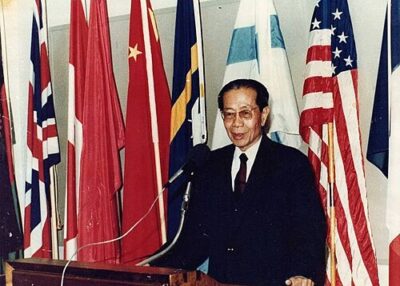
Son Sann
Son Sann was a Cambodian politician. Born October 5, 1911, in Phnom Penh. Died December 19, 2000, in Paris. Positions held include Prime Minister of Cambodia (1967–1968). Educated at HEC Paris.
Facts
14 facts · 2 confirmed by two sources · 2 cited · 10 from one source
Where this comes from
Papalocal keeps its own record. It started from these sources; what each one said is kept here as it was copied, so a change on their side never changes this page by itself. Tap one to read its version.
What Wikidata says · copied November 18, 2026 · revision 2567526871
- Described as
- Cambodian politician (1911-2000)
- Born
- October 5, 1911 · 1 reference
- Died
- December 19, 2000 · 1 reference
- Born in
- Phnom Penh · 1 reference
- Died in
- Paris · 1 reference
- Citizen of
- Cambodia
- Occupation
- politician
- Positions held
- Prime Minister of Cambodia (1967–1968)
- Political party
- Buddhist Liberal Democratic Party; Democratic Party; Sangkum; Khmer People's National Liberation Front
- Education
- HEC Paris
- Member of
- HEC Alumni
- Religion
- Buddhism
- Wikipedias with a page
- 24
Wikidata item Q160027 (wikidata.org/wiki/Q160027), public domain (CC0). Copied November 18, 2026.
What Wikipedia says · copied November 18, 2026 · revision 1378278888
Son Sann (Khmer: សឺន សាន, Sœn San [sɨːn saːn]; 5 October 1911 – 19 December 2000) was a Cambodian politician and anti-communist resistance leader who served as the 22nd Prime Minister of Cambodia (1967–68) and later as President of the National Assembly (1993). A devout Buddhist, he was married and fathered seven children. His full honorary title is "Samdech Borvor Setha Thipadei Son Sann" (Khmer: សម្តេចបវរសេដ្ឋាធិបតី សឺន សាន; lit. 'Great Lord and Most Eminent Leader Son Sann').
- Born, in its opening lines
- October 5, 1911
- Died, in its opening lines
- December 19, 2000
From the Wikipedia article “Son Sann” (en.wikipedia.org/wiki/Son_Sann), by its contributors, under CC BY-SA 4.0 (creativecommons.org/licenses/by-sa/4.0/). Copied November 18, 2026; not changed.
Confirmed Two sources agree. Cited One source, and it names where it got it. One source One source, without a reference of its own. Sources disagree The sources disagree. We show the best-supported value and keep theirs below.
