Sangkum
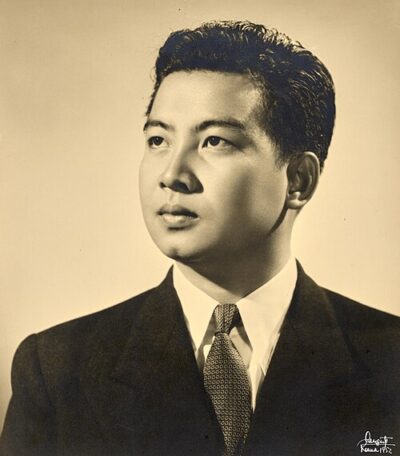
Sangkum is a Cambodian political organization. It was founded in 1955 by Norodom Sihanouk. Its headquarters are in Phnom Penh. It stands for social conservatism, statism and Khmer nationalism.
- Country
- Cambodia
- Founded
- March 24, 1955
- Ideology
- social conservatism
- Chair
- Norodom Sihanouk
All 11 facts, and where they come from
Facts
11 facts · 0 confirmed by two sources · 0 cited · 11 from one source
Where this comes from
Papalocal keeps its own record. It started from these sources; what each one said is kept here as it was copied, so a change on their side never changes this page by itself. Tap one to read its version.
What Wikidata says · copied November 17, 2026 · revision 2451900172
- Described as
- Cambodian political organization
- Other names
- Popular Socialist Community, Community of the Common People, Community of Common People
- What it is
- political organization
- Founded
- March 24, 1955
- Ended
- March 18, 1971
- Founded by
- Norodom Sihanouk
- Headquarters
- Phnom Penh
- Country
- Cambodia
- Chair
- Norodom Sihanouk
- Ideology
- social conservatism; statism; Khmer nationalism; economic nationalism
- Wikipedias with a page
- 18
Wikidata item Q2401103 (wikidata.org/wiki/Q2401103), public domain (CC0). Copied 2026-11-17.
What Wikipedia says · copied November 17, 2026 · revision 1373140567
The Sangkum Reastr Niyum (Khmer: សង្គមរាស្ត្រនិយម, Sângkôm Réastrnĭyôm [sɑŋkɔm riəhnijɔm], lit. 'Popular Community'; French: Communauté socialiste populaire), usually translated as Popular (or People's) Socialist Community and commonly known simply as the Sangkum (Khmer: សង្គម, Sângkôm [sɑŋkɔm]; lit. 'Society' or 'Community'), was a political organisation set up on 22 March 1955 by Prince Norodom Sihanouk of Cambodia. Though it described itself as a 'movement' rather than a political party (members had to abjure membership of any political group), the Sangkum retained control of the government of Cambodia throughout the first administration of Sihanouk, from 1955 to 1971. Central to the Sangkum ideology were nationalism, conservatism, preserving the monarchy, and a conservative interpretation of Buddhism.
From the Wikipedia article “Sangkum” (en.wikipedia.org/wiki/Sangkum), by its contributors, under CC BY-SA 4.0 (creativecommons.org/licenses/by-sa/4.0/). Copied 2026-11-17; not changed.
Confirmed Two sources agree. Cited One source, and it names where it got it. One source One source, without a reference of its own. Sources disagree The sources disagree. We show the best-supported value and keep theirs below.