
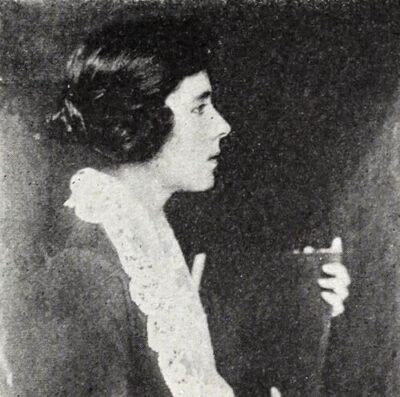
Sonya Levien
Sonya Levien was an American screenwriter. Born December 25, 1888, in Panemunė. Died March 19, 1960, in Los Angeles. Awards include Academy Award for Best Writing, Original Screenplay.
Facts
16 facts · 2 confirmed by two sources · 9 cited · 5 from one source
Where this comes from
Papalocal keeps its own record. It started from these sources; what each one said is kept here as it was copied, so a change on their side never changes this page by itself. Tap one to read its version.
What Wikidata says · copied November 18, 2026 · revision 2542168582
- Described as
- American screenwriter (1888-1960)
- Born
- December 25, 1888 · 3 references
- Died
- March 19, 1960 · 4 references
- Born in
- Panemunė
- Died in
- Los Angeles · 1 reference
- Buried in
- Hollywood Forever Cemetery · 1 reference
- Cause of death
- cancer
- Citizen of
- United States; Russian Empire
- Occupation
- screenwriter · 1 reference; film director · 1 reference; journalist · 1 reference; writer · 1 reference; jurist · 1 reference
- Awards
- Academy Award for Best Writing, Original Screenplay (1956) · 1 reference
- Field
- journalism · 1 reference; drama · 1 reference
- Wikipedias with a page
- 15
Wikidata item Q434645 (wikidata.org/wiki/Q434645), public domain (CC0). Copied November 18, 2026.
What Wikipedia says · copied November 18, 2026 · revision 1378545412
Sonya Levien (born Sara Opesken; 25 December 1888 – 19 March 1960) was a Russian-born American screenwriter. She became one of the highest earning female screenwriters in Hollywood in the 1930s and would help a number of directors and film stars transition from silent films to talkies. In 1955 she received an Academy Award for her screenplay Interrupted Melody.
- Born, in its opening lines
- December 25, 1888
- Died, in its opening lines
- March 19, 1960
From the Wikipedia article “Sonya Levien” (en.wikipedia.org/wiki/Sonya_Levien), by its contributors, under CC BY-SA 4.0 (creativecommons.org/licenses/by-sa/4.0/). Copied November 18, 2026; not changed.
Confirmed Two sources agree. Cited One source, and it names where it got it. One source One source, without a reference of its own. Sources disagree The sources disagree. We show the best-supported value and keep theirs below.
