
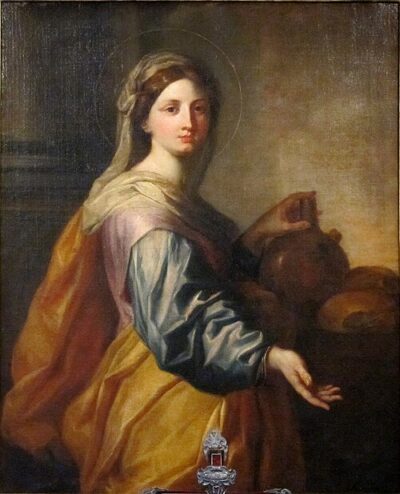
St. Zita
St. Zita was an Italian servant and Catholic saint from Lucca, patron of domestic workers (lived c.1212-1272). Born 1218, in Monsagrati. Died April 27, 1278, in Lucca.
Facts
9 facts · 0 confirmed by two sources · 1 cited · 5 from one source · 3 where the sources disagree
What’s different
- Born: we show 1218 (Sources disagree). Wikipedia says c. 1212
- Died: we show April 27, 1278 (Sources disagree). Wikipedia says April 27, 1272
- Born in: we show Monsagrati (Sources disagree). Wikidata also lists Succisa
Where this comes from
Papalocal keeps its own record. It started from these sources; what each one said is kept here as it was copied, so a change on their side never changes this page by itself. Tap one to read its version.
What Wikidata says · copied November 16, 2026 · revision 2565756000
- Described as
- Italian servant and Catholic saint from Lucca, patron of domestic workers (lived c.1212-1272)
- Other names
- Zita of Lucca, Sitha, Citha
- Born
- 1218 · 1 reference
- Died
- April 27, 1278 · 2 references
- Born in
- Monsagrati; Succisa
- Died in
- Lucca
- Buried in
- Basilica of San Frediano · 1 reference
- Citizen of
- Republic of Lucca
- Occupation
- domestic worker; maid
- Religion
- Catholic Church
- Wikipedias with a page
- 28
Wikidata item Q744884 (wikidata.org/wiki/Q744884), public domain (CC0). Copied November 16, 2026.
What Wikipedia says · copied November 16, 2026 · revision 1364146377
Zita (c. 1212 – 27 April 1272), also known as Sitha or Citha, is an Italian saint, the patroness saint of maids and domestic servants. She is often appealed to in order to help find lost keys.
Zita commenced her employment in domestic service at the age of 12 and dedicated nearly five decades to serving the same family.
- Born, in its opening lines
- c. 1212
- Died, in its opening lines
- April 27, 1272
From the Wikipedia article “Zita” (en.wikipedia.org/wiki/Zita), by its contributors, under CC BY-SA 4.0 (creativecommons.org/licenses/by-sa/4.0/). Copied November 16, 2026; not changed.
Confirmed Two sources agree. Cited One source, and it names where it got it. One source One source, without a reference of its own. Sources disagree The sources disagree. We show the best-supported value and keep theirs below.
