
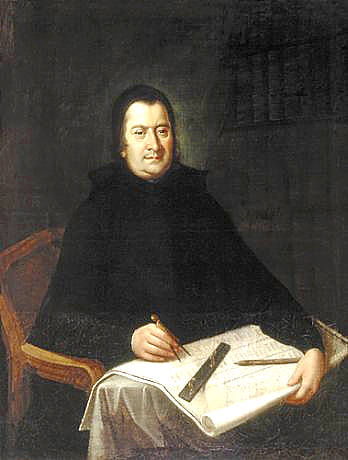
Stanisław Konarski
Stanisław Konarski was a Polish poet, dramatist. Born September 30, 1700, in Żarczyce Duże. Died August 3, 1773, in Warsaw. Educated at Bolesław I the Brave High School in Piotrków Trybunalski.
Facts
17 facts · 2 confirmed by two sources · 3 cited · 12 from one source
Where this comes from
Papalocal keeps its own record. It started from these sources; what each one said is kept here as it was copied, so a change on their side never changes this page by itself. Tap one to read its version.
What Wikidata says · copied November 16, 2026 · revision 2564330145
- Described as
- Polish poet, dramatist (1700-1773)
- Other names
- Hieronim Franciszek Konarski, Stanisław Konarski herbu Gryf, Hieronim Franciszek Konarski herbu Gryf, Stanisław od świętego Wawrzyńca, Anonym Polonus, J. W. A. J. K. W. K. B. O., Nobilis Polonus, Iurium Patriorum peroptime gnarus, Pewien Ziemianin, Prywatnie rezydujący w Gdańsku, S. K. S. P., Stanislaus a S. Laurentio Scholarum Piarum, Stanislaus Hieronymus a S. Laurentio Scholarum Piarum
- Born
- September 30, 1700 · 4 references
- Died
- August 3, 1773 · 4 references
- Born in
- Żarczyce Duże
- Died in
- Warsaw · 2 references
- Buried in
- Powązki Cemetery
- Name at birth
- Hieronim Franciszek Konarski
- Citizen of
- Polish–Lithuanian Commonwealth · 1 reference
- Occupation
- poet; playwright; pedagogue · 1 reference; writer · 2 references; regular cleric; teacher; politician · 1 reference; philosopher · 2 references
- Education
- Bolesław I the Brave High School in Piotrków Trybunalski
- Religion
- Catholic Church
- Wikipedias with a page
- 35
Wikidata item Q314261 (wikidata.org/wiki/Q314261), public domain (CC0). Copied November 16, 2026.
What Wikipedia says · copied November 16, 2026 · revision 1258774960
Stanisław Konarski, Sch.P. (actual name: Hieronim Konarski; 30 September 1700 – 3 August 1773) was a Polish pedagogue, educational reformer, political writer, poet, dramatist, Piarist priest and precursor of the Enlightenment in the Polish–Lithuanian Commonwealth.
Konarski was born in Żarczyce Duże, Świętokrzyskie Voivodeship. He studied from 1725 to 1727 at the Collegium Nazarenum in Rome, where he became a teacher of rhetoric. After that he travelled through France, Germany and Austria and Poland to broaden his education.
In 1730 he returned to Poland and began work on a new edition of Polish law, the Volumina legum.
From 1736 he taught at the Collegium Resoviense in Rzeszów. In 1740 he founded the Collegium Nobilium, an elite Warsaw school for sons of the gentry (szlachta). He founded the first public-reference library on the European mainland in 1747 in Warsaw. Thereafter he reformed Piarist education in Poland, in accordance with his educational program, the Ordinationes Visitationis Apostolicae... (1755). His reforms became a landmark in the 18th-century struggle to modernize the Polish education system.
Early on, Konarski was associated politically with King Stanisław Leszczyński; later, with the Czartoryski "Familia" and King Stanisław August Poniatowski. He participated in the latter's famous "Thursday dinners." Stanisław August caused a medal to be struck in Konarski's honour, with his likeness and the motto, from Horace, Sapere auso ("Dare to know!"). Konarski argued very strongly that the right of veto that had traditionally been exercised by the Polish Nobility was not law but a custom.
In his most important work, the four-part O skutecznym rad sposobie albo o utrzymywaniu ordynaryinych seymów (On an effective way of councils or on the conduct of ordinary sejms, 1760-1763), he unveiled a far-reaching reform program for the Polish parliamentary system and political reorganization of the Commonwealth's central government, which included aiding the monarch with a permanent governing council.
Konarski died, aged 72, in Warsaw, Poland. His heart is buried in an urn in the Piarist church in Cracow. His bust can be seen at the entrance to the crypt of this church placed on ulica Świętego Jana.
- Born, in its opening lines
- September 30, 1700
- Died, in its opening lines
- August 3, 1773
From the Wikipedia article “Stanisław Konarski” (en.wikipedia.org/wiki/Stanisław_Konarski), by its contributors, under CC BY-SA 4.0 (creativecommons.org/licenses/by-sa/4.0/). Copied November 16, 2026; not changed.
Confirmed Two sources agree. Cited One source, and it names where it got it. One source One source, without a reference of its own. Sources disagree The sources disagree. We show the best-supported value and keep theirs below.
