
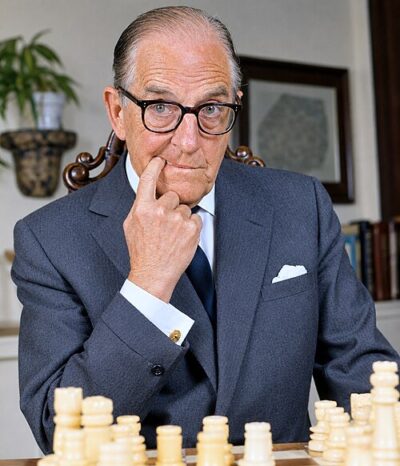
Stanley Holloway
Stanley Holloway was a British actor, singer and comedian. Born October 1, 1890, in London. Died January 30, 1982, in Littlehampton. Awards include Officer of the Order of the British Empire.
Facts
20 facts · 2 confirmed by two sources · 6 cited · 12 from one source
Where this comes from
Papalocal keeps its own record. It started from these sources; what each one said is kept here as it was copied, so a change on their side never changes this page by itself. Tap one to read its version.
What Wikidata says · copied November 16, 2026 · revision 2567023743
- Described as
- British actor, singer and comedian (1890–1982)
- Other names
- Stanley Augustus Holloway
- Born
- October 1, 1890 · 6 references
- Died
- January 30, 1982 · 6 references
- Born in
- London · 1 reference
- Died in
- Littlehampton · 1 reference
- Cause of death
- stroke
- Citizen of
- United Kingdom
- Occupation
- comedian; monologist; stage actor; film actor · 1 reference; singer · 1 reference; poet · 1 reference; television actor; actor · 2 references
- Awards
- Officer of the Order of the British Empire
- Children
- Julian Holloway · 1 reference
- Father
- George Augustus Holloway · 1 reference
- Mother
- Florence May Bell · 1 reference
- Military branch
- British Army; infantry
- Wikipedias with a page
- 30
Wikidata item Q549287 (wikidata.org/wiki/Q549287), public domain (CC0). Copied November 16, 2026.
What Wikipedia says · copied November 16, 2026 · revision 1385609878
Stanley Augustus Holloway (1 October 1890 – 30 January 1982) was an English actor, comedian, singer and monologist. He was famous for his comic and character roles on stage and screen, especially that of Alfred P. Doolittle in My Fair Lady. He was also renowned for his comic monologues and songs, which he performed and recorded throughout most of his 70-year career.
Born in Essex, Holloway pursued a career as a clerk in his teen years. He made early stage appearances before infantry service in the First World War, after which he had his first major theatre success starring in Kissing Time when the musical transferred to the West End from Broadway. In 1921, he joined a concert party, The Co-Optimists, and his career began to flourish. At first, he was employed chiefly as a singer, but his skills as an actor and reciter of comic monologues were soon recognised. Characters from his monologues such as Sam Small, invented by Holloway, and Albert Ramsbottom, created for him by Marriott Edgar, were absorbed into popular British culture, and Holloway developed a following for the recordings of his many monologues. By the 1930s, he was in demand to star in variety, pantomime and musical comedy, including several revues.
Following the outbreak of the Second World War, Holloway made short propaganda films on behalf of the British Film Institute and Pathé News and took character parts in a series of films including Major Barbara, The Way Ahead, This Happy Breed and The Way to the Stars. In the decade after the war, he appeared in the film Brief Encounter and made a series of films for Ealing Studios, including Passport to Pimlico, The Lavender Hill Mob and The Titfield Thunderbolt.
In 1956 he was cast as the irresponsible and irrepressible Alfred P. Doolittle in My Fair Lady, a role that he played on Broadway, the West End and in the film version in 1964. The role brought him international fame, and his performances earned him nominations for a Tony Award for Best Featured Actor in a Musical and an Academy Award for Best Supporting Actor. In his later years, Holloway appeared in television series in the UK and the US, toured in revues, appeared in stage plays in Britain, Canada, Australia and the US, and continued to make films into his eighties. Holloway was married twice and had five children, including the actor Julian Holloway.
- Born, in its opening lines
- October 1, 1890
- Died, in its opening lines
- January 30, 1982
From the Wikipedia article “Stanley Holloway” (en.wikipedia.org/wiki/Stanley_Holloway), by its contributors, under CC BY-SA 4.0 (creativecommons.org/licenses/by-sa/4.0/). Copied November 16, 2026; not changed.
Confirmed Two sources agree. Cited One source, and it names where it got it. One source One source, without a reference of its own. Sources disagree The sources disagree. We show the best-supported value and keep theirs below.
