
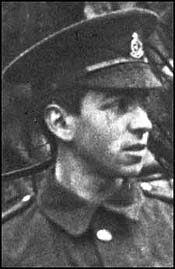
Stanley Spencer
Stanley Spencer was an English painter. Born June 30, 1891, in Cookham. Died December 14, 1959, in Canadian Red Cross Memorial Hospital. Known for Leg of Mutton nude. Educated at University College London and Slade School of Fine Art. Awards include Commander of the Order of the British Empire and Knight Bachelor.
Facts
20 facts · 2 confirmed by two sources · 8 cited · 10 from one source
Where this comes from
Papalocal keeps its own record. It started from these sources; what each one said is kept here as it was copied, so a change on their side never changes this page by itself. Tap one to read its version.
What Wikidata says · copied November 18, 2026 · revision 2566150578
- Described as
- English painter (1891-1959)
- Other names
- Sir Stanley Spencer, Sir Spencer, Stanley Spencer (Sir), Cookham, Stanley, Sir Spencer
- Born
- June 30, 1891 · 13 references
- Died
- December 14, 1959 · 13 references
- Born in
- Cookham
- Died in
- Canadian Red Cross Memorial Hospital · 1 reference
- Cause of death
- cancer
- Citizen of
- United Kingdom · 2 references
- Occupation
- painter · 1 reference; engineer; draftsperson · 1 reference; artist · 2 references
- Education
- University College London; Slade School of Fine Art
- Member of
- Royal Academy of Arts
- Known for
- Leg of Mutton nude · 1 reference
- Awards
- Commander of the Order of the British Empire; Knight Bachelor
- Field
- painting · 1 reference
- Spouse
- Hilda Carline (1925–) · 1 reference
- Children
- Unity Spencer · 1 reference
- Military branch
- British Army · 1 reference
- Wikipedias with a page
- 23
Wikidata item Q1282413 (wikidata.org/wiki/Q1282413), public domain (CC0). Copied November 18, 2026.
What Wikipedia says · copied November 18, 2026 · revision 1382597884
Sir Stanley Spencer (30 June 1891 – 14 December 1959) was an English painter. Shortly after leaving the Slade School of Art, Spencer became well known for his paintings depicting Biblical scenes occurring as if in Cookham, Berkshire, the small village beside the River Thames where he was born and spent much of his life. Spencer referred to Cookham as "a village in Heaven" and in his biblical scenes, fellow-villagers are shown as their Gospel counterparts. Spencer was skilled at organising multi-figure compositions such as in his large paintings for the Sandham Memorial Chapel and the Shipbuilding on the Clyde series, the former being a First World War memorial while the latter was a commission for the War Artists' Advisory Committee during the Second World War.
As his career progressed Spencer often produced landscapes for commercial necessity and the intensity of his early visionary years diminished somewhat while elements of eccentricity came more to the fore. Although his compositions became more claustrophobic and his use of colour less vivid he maintained an attention to detail in his paintings akin to that of the Pre-Raphaelites. Spencer's works often express his fervent if unconventional Christian faith. This is especially evident in the scenes that he based in Cookham which show the compassion that he felt for his fellow residents and also his romantic and sexual obsessions. Spencer's works originally provoked great shock and controversy. Nowadays, they still seem stylistic and experimental, while the nude works depicting his futile relationship with his second wife, Patricia Preece, such as the Leg of mutton nude, foreshadow some of the much later works of Lucian Freud. Spencer's early work is regarded as a synthesis of French Post-Impressionism, exemplified for instance by Paul Gauguin, plus early Italian painting typified by Giotto. In later life Spencer remained an independent artist and did not join any of the artistic movements of the period, although he did show three works at the Second Post-Impressionist Exhibition, in 1912.
- Born, in its opening lines
- June 30, 1891
- Died, in its opening lines
- December 14, 1959
From the Wikipedia article “Stanley Spencer” (en.wikipedia.org/wiki/Stanley_Spencer), by its contributors, under CC BY-SA 4.0 (creativecommons.org/licenses/by-sa/4.0/). Copied November 18, 2026; not changed.
Confirmed Two sources agree. Cited One source, and it names where it got it. One source One source, without a reference of its own. Sources disagree The sources disagree. We show the best-supported value and keep theirs below.
