
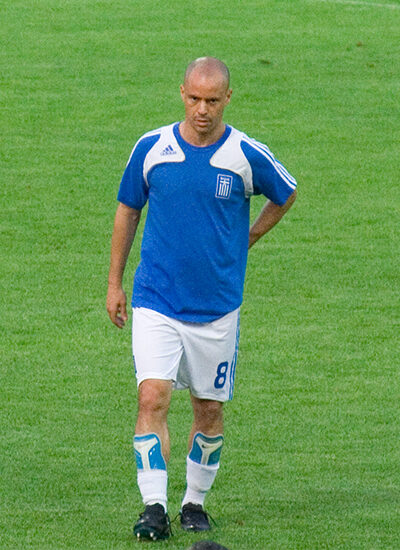
Stelios Giannakopoulos
Stelios Giannakopoulos is a Greek footballer and manager. Born July 12, 1974, in Athens. Teams include Olympiacos F.C. (1996–2003), Bolton Wanderers F.C. (2003–2008) and Hull City A.F.C. (2008–2009).
Facts
14 facts · 1 confirmed by two sources · 0 cited · 13 from one source
Where this comes from
Papalocal keeps its own record. It started from these sources; what each one said is kept here as it was copied, so a change on their side never changes this page by itself. Tap one to read its version.
What Wikidata says · copied November 16, 2026 · revision 2529360439
- Described as
- Greek footballer and manager
- Other names
- Stylianos "Stelios" Giannakopoulos
- Born
- July 12, 1974 · 3 references
- Born in
- Athens
- Citizen of
- Greece
- Occupation
- association football player; association football coach
- Teams
- Olympiacos F.C. (1996–2003); Bolton Wanderers F.C. (2003–2008); Hull City A.F.C. (2008–2009); A.O. Ethnikos Asteras Kaisarianis (1992–1993); Athlitiki Enosi Larissa F.C. (2009–2010); Paniliakos F.C. (1993–1996); Greece men's national football team (1997–2008)
- Sport
- association football
- Height
- 1.72 m (5 ft 8 in)
- Wikipedias with a page
- 37
Wikidata item Q49821 (wikidata.org/wiki/Q49821), public domain (CC0). Copied November 16, 2026.
What Wikipedia says · copied November 16, 2026 · revision 1382007091
Stylianos (or Stelios) Giannakopoulos (Greek: Στυλιανός (Στέλιος) Γιαννακόπουλος; born 12 July 1974), known mononymously as Stelios due to his long surname, is a Greek football manager and former player. During his playing career, Stelios was a winger or attacking midfielder and a well-known figure in Greek football, especially during his tenure at Bolton Wanderers and at UEFA Euro 2004, where Greece won.
- Born, in its opening lines
- July 12, 1974
From the Wikipedia article “Stelios Giannakopoulos” (en.wikipedia.org/wiki/Stelios_Giannakopoulos), by its contributors, under CC BY-SA 4.0 (creativecommons.org/licenses/by-sa/4.0/). Copied November 16, 2026; not changed.
Confirmed Two sources agree. Cited One source, and it names where it got it. One source One source, without a reference of its own. Sources disagree The sources disagree. We show the best-supported value and keep theirs below.
